Unlocking Holistic Wellbeing for Organizational Success
Managing people means understanding their holistic wellbeing—the foundation of engagement, performance, and retention.
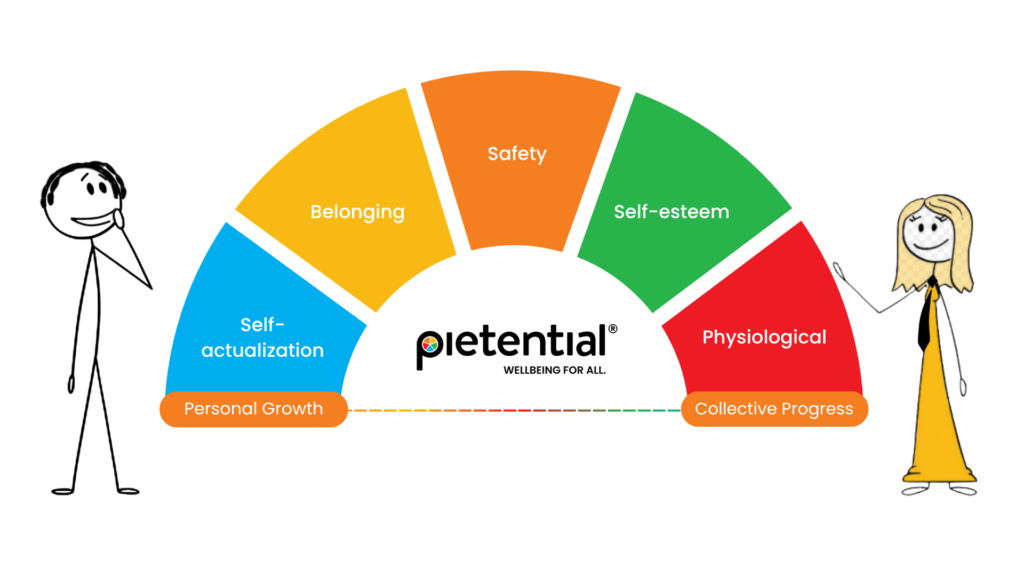
Pietential is a platform that provides deep insights into employee wellbeing across five critical domains: Physiological, Safety, Belonging, Self-Esteem, and Self-Actualization. By measuring holistic wellbeing, Pietential helps organizations take a people-centric, data-driven approach to employee support and growth.
In this paper, learn how Pietential:
- Transcends the limits of “workplace wellbeing” to address holistic wellbeing.
- Serves as a unifying layer for the HR stack, enhancing other tools.
- Provides leading indicators to make proactive HR decisions.
Pietential is the key to building a resilient, engaged workforce.
Executive Summary
As companies grow, managing people effectively becomes increasingly complex. Most organizations rely on a collection of tools known as the HR stack to manage recruitment, performance, benefits, and engagement. However, many of these tools focus on specific, siloed aspects of HR, often overlooking a fundamental driver of employee success: holistic wellbeing.
Pietential offers a solution that addresses this gap. As a holistic wellbeing diagnostic, development, monitoring, and alerting platform, Pietential helps organizations measure, understand, and improve the wellbeing of their workforce across all areas of life, not just at work. By focusing on wellbeing as a leading indicator, Pietential provides deep, actionable insights that support a people-centric, data-driven HR strategy.
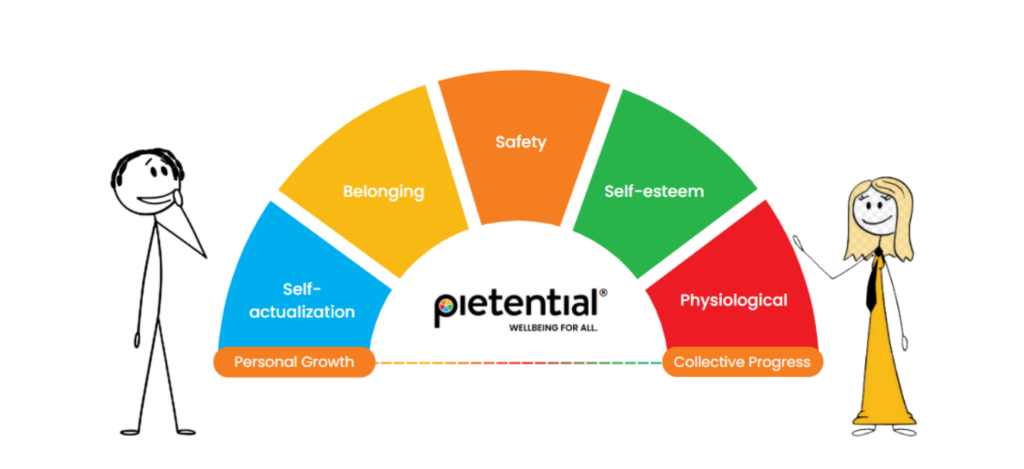
This white paper explores how Pietential fits into and enhances the traditional HR stack. Unlike “workplace wellbeing” tools that limit their scope to job-related factors, Pietential takes a holistic approach, measuring wellbeing through five domains derived from Maslow’s Hierarchy of Needs: Physiological, Safety, Belonging, Self-Esteem, and Self-Actualization. These dimensions go beyond work, recognizing that employees bring their whole selves to the workplace, and that their overall wellbeing directly impacts their engagement, performance, and retention.
The paper also highlights the fallacy of “workplace wellbeing”, arguing that it is an outdated and narrow concept. Real wellbeing is not confined to the office; it is holistic and encompasses the physical, emotional, and social aspects of life. By measuring these dimensions, Pietential provides the foundation for HR leaders to build proactive strategies that address the root causes of employee disengagement, burnout, or underperformance.
Through its integration with existing HR tools, Pietential serves as a unifying layer within the HR stack, offering insights that inform key decisions across multiple areas, including employee engagement, performance management, talent development, and HR analytics. By providing leading indicators of wellbeing, Pietential enables HR leaders to anticipate and address issues before they escalate, driving better outcomes across the entire employee lifecycle.
Ultimately, Pietential transforms the HR stack from a collection of disjointed tools into a cohesive, people-centric, data-driven strategy, empowering organizations to support and grow their workforce in a meaningful way. This white paper provides a comprehensive look at how Pietential enhances HR strategy by placing holistic wellbeing at the center of organizational success.
The HR Stack: An Overview
Before diving into Pietential’s role in the HR landscape, it’s crucial to understand the context in which it operates—the HR stack. An HR stack refers to the collection of tools and platforms that organizations use to manage the entire employee lifecycle. These tools serve distinct purposes and focus on everything from recruitment to performance management and employee wellbeing. Here’s a breakdown of the most common components:
- Human Capital Management (HCM) Systems or HRIS: Centralizes core HR functions like payroll, employee data, benefits, and compliance.
- Applicant Tracking Systems (ATS): Automates recruitment, job postings, and candidate management.
- Learning Management Systems (LMS): Supports employee training, skill development, and certification tracking.
- Performance Management Platforms: Facilitates goal setting, feedback, and performance evaluations.
- Employee Engagement and Wellbeing Platforms: Tracks employee engagement, offers wellbeing programs, and includes Employee Assistance Programs (EAPs).
- Benefits Administration Systems: Manages employee benefits such as healthcare plans, retirement savings, and wellness programs.
- Diversity, Equity, and Inclusion (DEI) Tools: Promote DEI initiatives through analytics, feedback, and resource group management.
- HR Analytics Platforms: Provides data-driven insights into workforce trends, such as turnover, performance, and engagement.
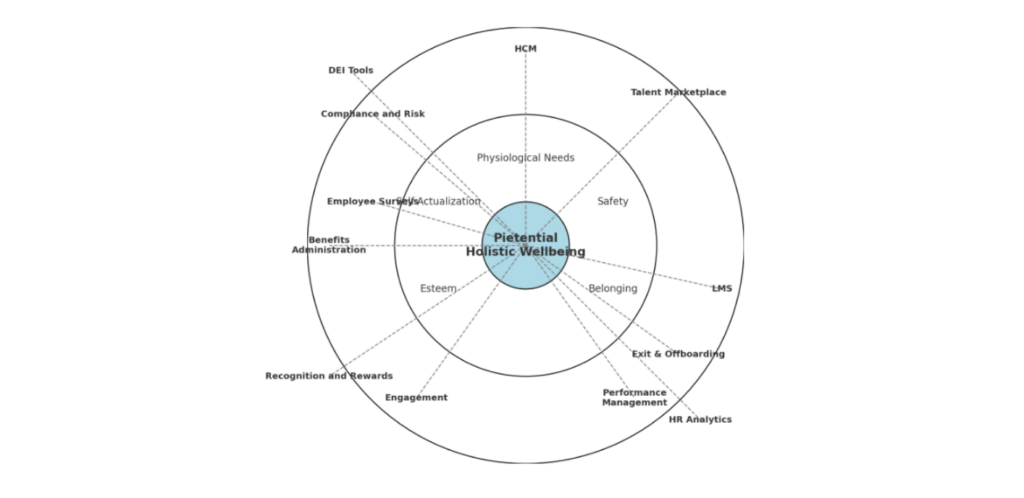
These tools are critical to a company’s HR strategy but often operate in silos, addressing specific challenges without providing a holistic view of the employee experience. This is where Pietential fits in as a unifying layer that can enhance and complement these existing systems by focusing on holistic wellbeing—the underlying factor that influences performance, engagement, retention, and overall employee satisfaction.
Defining Holistic Wellbeing
Holistic wellbeing is the state of being in which individuals have their needs meta cross multiple dimensions of life. It encompasses everything from personal growth and emotional health to social connectedness and self-actualization. At Pietential, holistic wellbeing is measured through five key domains derived from Maslow’s Hierarchy of Needs (MHN):

Physiology:
Biological necessities crucial for human survival such as rest, nutrition, and physical wellness.
Safety:
Protection from threats and fostering emotional, financial, and overall stability.

Belonging:
Building strong, supportive relationships and a sense of connection.

Self-Esteem:
Reflection of one’s self-worth, shaped by confidence, respect and value attributed to oneself.

Self-Actualization:
Realizing and achieving one’s fullest potential through personal growth, meaningful engagement, and a profound appreciation for life.
These domains go beyond the narrow focus on workplace factors like productivity or job satisfaction. Instead, they account for the full scope of human experience—both at work and beyond. Wellbeing at work can only be fully understood when seen in the context of a person’s overall life experience. A company may offer the best perks and office culture, but if an employee lacks belonging or struggles with self-esteem, their engagement and performance will inevitably suffer.
This is where Pietential’s holistic approach comes in. It provides a complete picture of employee wellbeing and helps leaders understand the root causes of engagement, performance, and retention issues.
Workplace Wellbeing: A Narrow, Outdated Concept
The term “workplace wellbeing” is increasingly used to describe the efforts organizations make to improve employee happiness and health at work. However, it is a limited concept and often overlooks the deeper, more complex needs of employees. Focusing solely on work-related wellbeing ignores the reality that human beings bring their whole selves to work, and challenges outside the office can directly impact their performance, engagement, and overall job satisfaction.
Workplace wellbeing, therefore, is a fallacy—an oversimplification that separates work from life. Wellbeing doesn’t begin when an employee logs in and ends when they log out. It is a holistic state that must be nurtured across all areas of life, including but not limited to work.
Pietential’s value proposition—a holistic wellbeing diagnostic, development, monitoring, and alerting platform—bridges this gap by providing organizations with the tools they need to understand their employees as whole people, not just workers. This insight helps companies move from simply managing HR metrics to developing strategies that proactively support the wellbeing of their workforce.

Pietential’s Features and Benefits
Pietential provides an array of features designed to give both employees and employers deep insights into wellbeing. These features serve as the foundation for proactive wellbeing strategies, enabling companies to create more engaged, productive, and satisfied workforces.
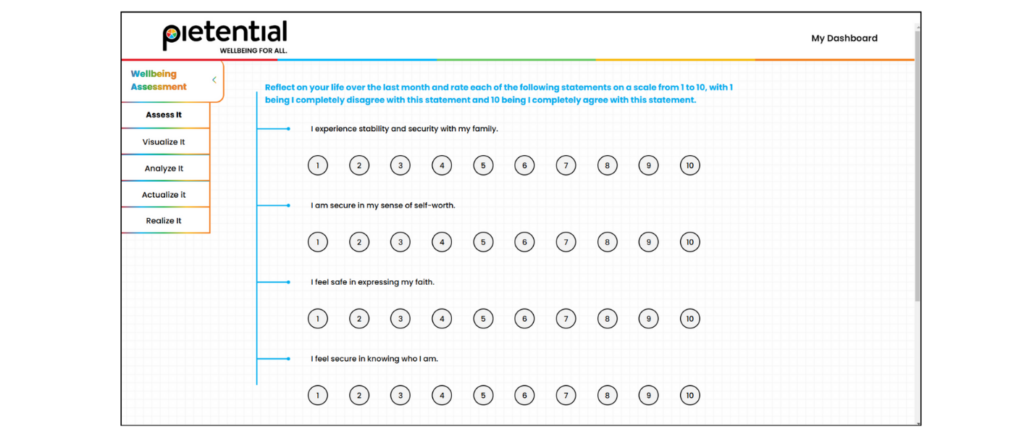
- Holistic Wellbeing Diagnostic:
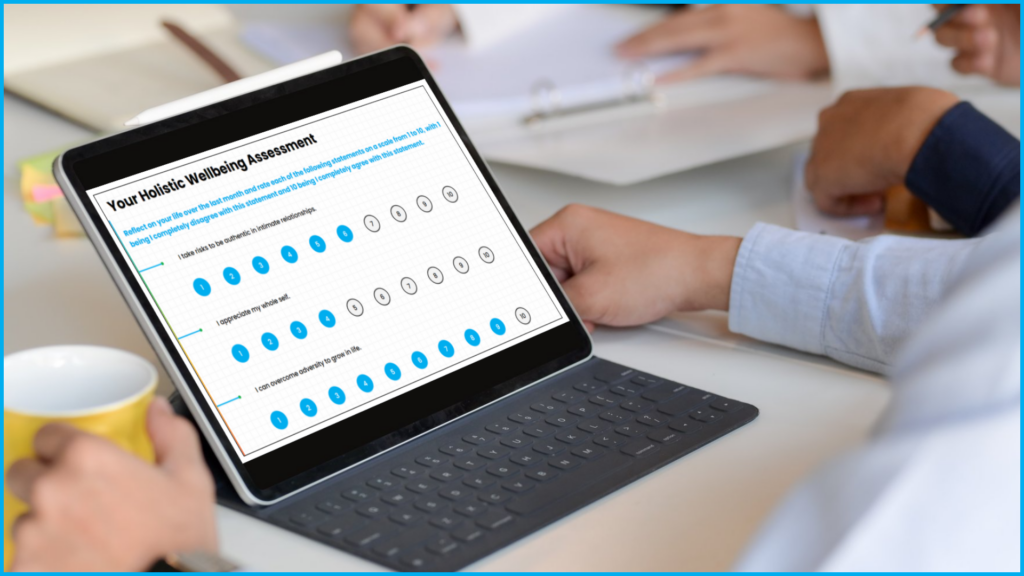
Pietential measures wellbeing across five critical domains (Physiological, Safety, Belonging, Self-Esteem, and Self-Actualization), providing a comprehensive understanding of each employee’s holistic wellbeing. This diagnostic empowers HR leaders to understand how different areas of wellbeing impact engagement, performance, and retention.
Benefit: HR teams can develop tailored strategies that address the specific wellbeing needs of different employees and cohorts, rather than applying one-size-fits-all solutions.
- Personalized Development Tools:
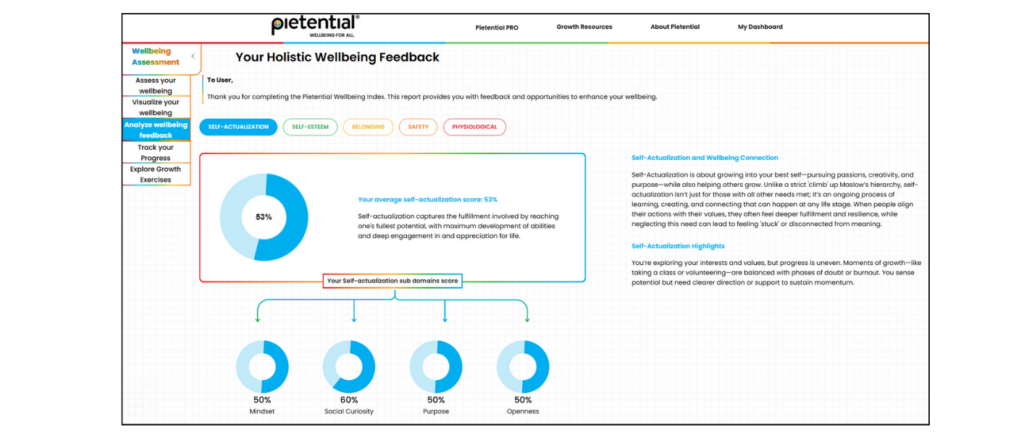
Pietential provides employees with personalized feedback on their overall wellbeing and individual domain scores, offering clear, actionable insights into their strengths and areas for growth. The platform delivers an Overall Wellbeing Score, Domain-Specific Insights, and a Subdomain Breakdown, helping individuals understand the factors shaping their wellbeing.
The Actualize It feature transforms these insights into action by offering tailored growth exercises based on each employee’s wellbeing diagnostic. As employees progress, Pietential dynamically updates exercises to ensure ongoing personal development.
Benefit: Employees receive targeted, data-driven guidance to enhance their wellbeing, fostering long-term growth, emotional intelligence, and resilience. This continuous development empowers employees to thrive personally and professionally, contributing more effectively to the organization.
- Wellbeing Monitoring and Alerts
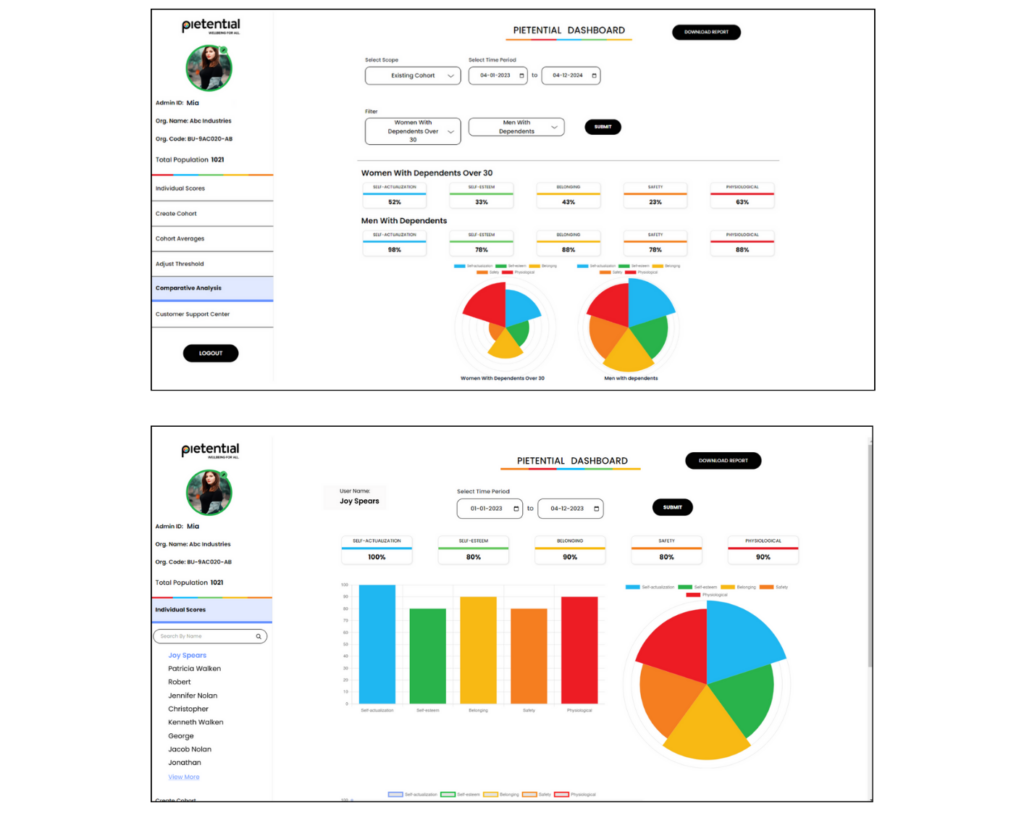
Pietential tracks wellbeing data over time and offers real-time monitoring, enabling HR leaders to identify emerging trends, potential risks, and areas of concern within the workforce. The platform enables organizations to monitor dips in wellbeing scoresat the individual, cohort, and organizational levels, helping identify potentialchallenges before they impact engagement, performance, or retention.
Benefit: This proactive monitoring allows organizations to intervene before minor issues escalate into larger problems like burnout, disengagement, or high turnover.
- Cohort and Demographic Analysis
Pietential provides the ability to segment data across cohorts and demographic categories, allowing HR leaders to compare wellbeing scores across departments, teams, or any other grouping.
Benefit: This analysis helps companies identify which groups may require more support or targeted interventions, providing a powerful tool for wellbeing gap analysis and continuous improvement.
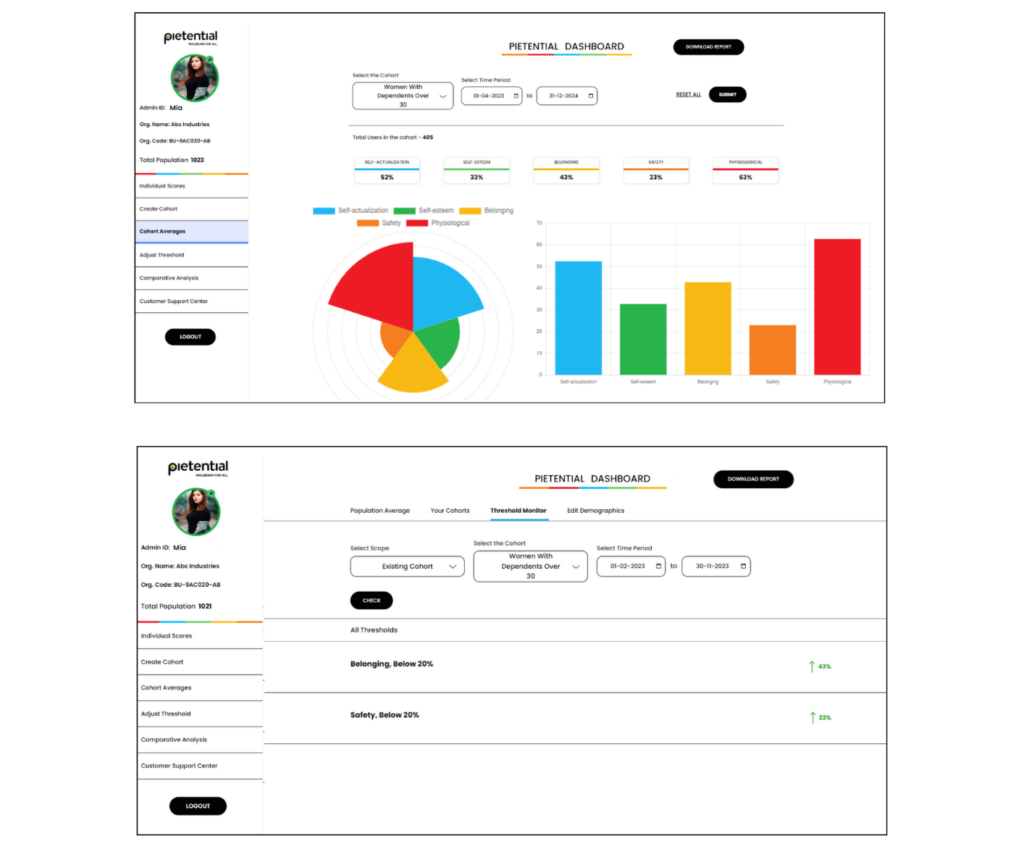
- Integrated Reporting and Insights
Pietential provides detailed wellbeing reports that allow HR leaders to correlate wellbeing data with key HR metrics such as performance reviews, retention rates, and engagement trends. These insights help organizations identify patterns and better understand the relationship between employee wellbeing and workforce outcomes. Reports can be shared with senior leadership to inform talent management, organizational culture, and development initiatives.
Benefit: By integrating wellbeing insights into strategic discussions, companies can align business goals with employee wellbeing priorities, fostering a healthier, more engaged workforce while driving organizational success.
- Anonymized Data for Strategic Planning
Pietential’s anonymized data can be used to uncover large-scale wellbeing trends, enabling HR leaders to conduct longitudinal studies or pilot new programs with data-backed confidence.
Benefit: Organizations can track the efficacy of internal programs, such as DEI initiatives, EAPs, or wellbeing programs, providing real-time feedback to improve these efforts.

The Role of Pietential in the HR Stack
Many companies rely on a variety of platforms in their HR stack to address distinct functions. These include Human Capital Management (HCM) systems, performance management platforms, learning management systems (LMS), and employee engagement tools. While these systems provide essential data on workforce operations, they often focus on lagging indicators—outcomes that reflect past behaviors, such as turnover, absenteeism, or performance.
Pietential fills the gap by offering leading indicators that give companies insights into the underlying wellbeing factors that influence these metrics. As a result, Pietential not only fits into the HR stack but can also serve as the unifying layer that undergirds and enhances all other components. Let’s explore how.

Employee Engagement
and Wellbeing Platforms
At its core, Pietential fits within this category by providing organizations with a wellbeing diagnostic tool that moves beyond simple engagement surveys. It offers continuous, data-driven feedback on employee wellbeing across the five domains of holistic wellbeing, giving HR leaders real-time insights that are both actionable and strategic.
Pietential doesn’t just measure engagement; it identifies the underlying wellbeing factors that drive engagement and offers developmental tools like its Actualize It exercises to support employee growth. In doing so, it ensures that organizations are not just reacting to disengagement but proactively supporting employees on their personal and professional journeys.

HR Analytics and Insights
Pietential can be thought of as an additional layer of people analytics that provides essential wellbeing data to enhance HR leaders’ decision-making. By measuring wellbeing factors like Belonging (rather than autonomy), Self-Esteem, and Safety, Pietential offers insights that can predict potential challenges, such as turnover or burnout, well before they appear in performance or engagement metrics.
This data allows HR leaders to align strategies around wellbeing and engagement, ensuring that wellbeing becomes the foundation of all HR decisions.

Performance Management Platforms
Performance management systems track employee achievements, goal-setting, and feedback. However, without understanding the wellbeing context, performance metrics can be misleading. For example, an employee struggling with Belonging or Self-Esteem may underperform not because of lack of skill, but because their core wellbeing needs aren’t being met.
Pietential offers the insights needed to tailor performance interventions based on wellbeing, helping employees build the “skills or habits of being” that are necessary for success in their roles. Rather than simply providing feedback on performance, Pietential helps HR leaders address the root causes that influence performance outcomes.

Learning Management Systems (LMS)
While LMS platforms focus on upskilling employees, Pietential complements theseefforts by offering development tools rooted in holistic wellbeing. The Actualize It exercises within Pietential help employees cultivate the personal growth skills that aren’t always addressed in traditional LMS environments—such as self-actualization, self-worth, or emotional intelligence.
By integrating personal development with formal learning, Pietential ensures that employees not only gain technical skills but also grow in ways that enhance their overall wellbeing.
Pietential as the Unifying Layer
At its core, Pietential functions as a unifying layer within the HR stack. It doesn’t replace existing systems; instead, it strengthens them by providing holistic wellbeing insights that can inform and enhance every other HR function. Here’s why this matters:
- Proactive, Data-Driven Decisions: With Pietential’s insights into employee wellbeing, HR leaders can take a proactive approach to issues like engagement, performance, and retention. Instead of waiting for problems to manifest, Pietential allows companies to act early based on leading indicators of wellbeing.
- Employee-Centric Strategy: Pietential places employees at the center of an organization’s HR strategy. By focusing on their holistic wellbeing—rather than just their work-related output—Pietential helps organizations build HR strategies that truly meet the needs of their people.
- Holistic Alignment Across Functions: Whether it’s performance management, engagement, or talent development, Pietential’s insights can inform all of these areas. It helps organizations create a cohesive strategy that aligns every aspect of HR with the ultimate goal of improving employee wellbeing.

Conclusion: Building a Holistic, Employee-Centric HR Strategy
In today’s complex workplace, organizations need more than just tools to manage HR processes. They need insights that help them understand and improve the holistic wellbeing of their workforce. Pietential provides exactly that—a diagnostic, development, monitoring, and alerting platform that undergirds the entire HR stack.
By focusing on wellbeing as the foundation of all HR outcomes, Pietential ensures that organizations aren’t just managing processes but actively supporting the growth and success of their people. In doing so, Pietential transforms the HR stack into a holistic, people-centric, data-driven strategy, enabling organizations to thrive in an increasingly complex and dynamic world.