HR leaders are surrounded by data. Turnover. Absenteeism. Claims. Engagement results. Performance ratings. The problem isn’t a lack of metrics.
The problem is timing.
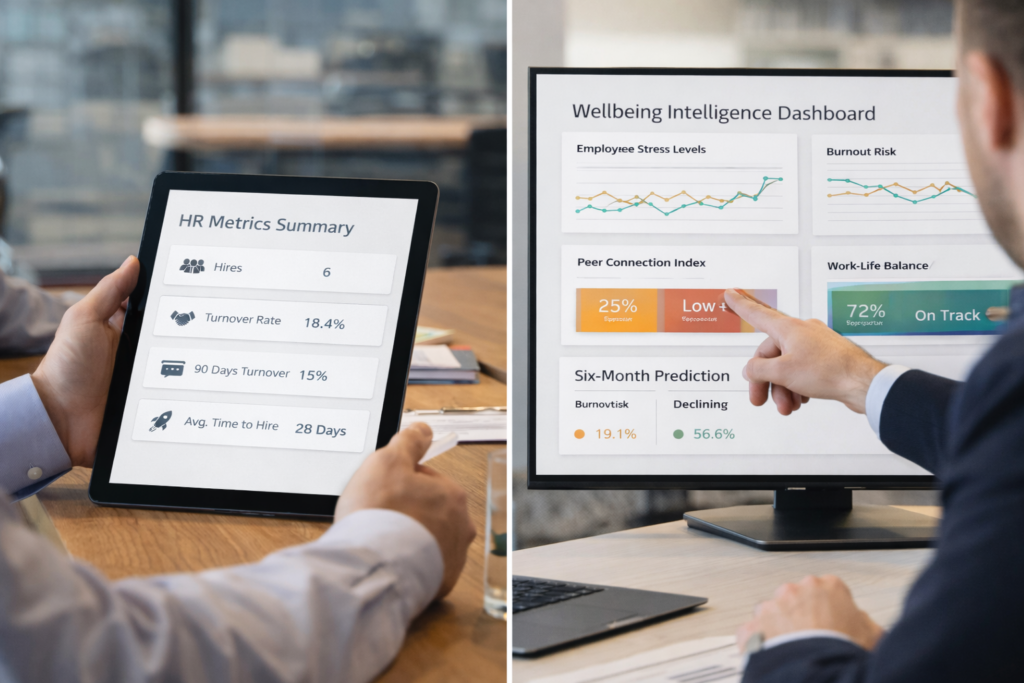
Most traditional HR metrics are lagging indicators. They tell you what happened after the opportunity to prevent it has passed. By the time turnover rises or absence spikes, the organization is already absorbing cost—lost productivity, replacement expense, disruption to delivery, and reputational impact.
In an environment where change is constant, leaders need a stronger operating model: foresight, not hindsight.
The hidden cost of relying on lagging indicators
Lagging metrics create a predictable pattern inside large organizations:
- Pressure builds quietly (workload, change fatigue, management gaps).
- Employees compensate (high performance, constant availability, withdrawal).
- The system notices only when outcomes appear (absence, lower performance, attrition).
- Leaders respond with broad interventions—often too late, and often too generic.
This is why burnout and retention issues can feel “sudden.” They aren’t sudden. They’re simply unseen.
Why the best people analytics teams still struggle here
Even advanced people analytics functions can get trapped in retrospective reporting, because their inputs are typically retrospective.
- Engagement data is periodic.
- Performance data is cyclical.
- Turnover data is definitive but late.
- Benefits and EAP data often reflects usage, not impact.
None of these are useless. But none are designed to surface early, actionable risk across cohorts at the speed leaders operate today.
What predictive wellbeing signals look like
Predictive signals don’t require perfect forecasting. They require earlier visibility into conditions that drive outcomes.
At an enterprise level, the goal is to detect:
- Sustained declines in wellbeing within a cohort
- Widening gaps between groups (equity risk)
- Patterns that cluster around specific functions, locations, or manager ecosystems
- Changes that correlate with known operational stressors (peak cycles, reorganizations, staffing constraints)
The point is not surveillance. The point is better decisions: where to allocate support, what to redesign, and which interventions are actually improving employee wellbeing over time.
Measurement vs intelligence: why dashboards aren’t enough
Many HR teams already have dashboards. That’s not the same as intelligence.
A dashboard is often a collection of metrics. Intelligence is a system that helps leaders:
- interpret signals over time
- connect signals to operational decisions
- prioritize interventions
- verify whether change occurred
This is where wellbeing intelligence becomes a strategic lever. It creates the conditions for earlier intervention—before disengagement becomes attrition.
A practical model for moving from hindsight to foresight
For organizations trying to build a predictive posture without boiling the ocean, this sequence works:
1) Identify your highest-cost risk zones
Start with the business question leadership actually cares about: retention in a critical role family, burnout risk in a specific function, or performance volatility during peak demand.
2) Establish leading wellbeing indicators for those zones
Leading indicators vary by context, but they typically sit upstream of attrition: sustained stress, eroding belonging, low safety, reduced recovery, and declining self-esteem at work.
3) Operationalize “early action”
Early signals only matter if they trigger action: manager support, workload redesign, targeted benefits communication, leadership interventions, or resourcing changes.
4) Validate impact over time
If you can’t show change, you can’t defend investment. Foresight must be paired with proof—especially in budget scrutiny cycles.
Where Pietential fits
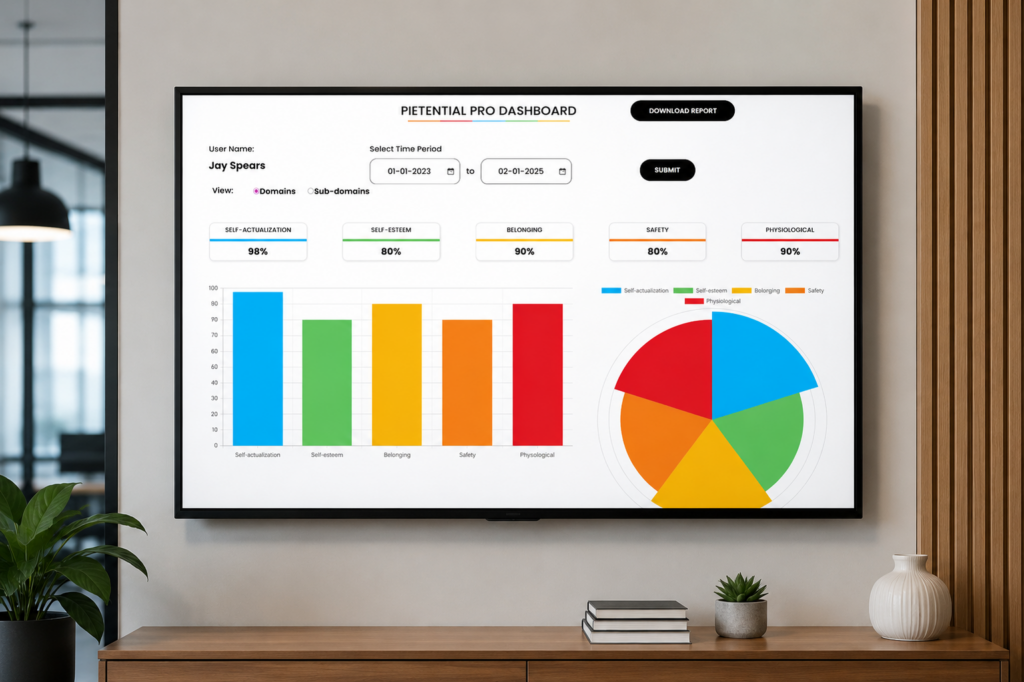
Pietential supports organizations by providing wellbeing intelligence grounded in Maslow’s hierarchy of needs—helping leaders see patterns early, segment by cohorts, and track change over time.
It’s designed to complement what you already run (surveys, benefits, EAPs), by answering a harder question: are we reducing risk and improving wellbeing in the places that most affect retention and performance?