Benefits leaders are under pressure from every side.
Finance wants proof of ROI. HR wants to demonstrate value. Employees want benefits that feel relevant, safe to use, and supportive in daily life—not just “available.”
In that environment, it’s tempting to lean on what’s easiest to measure: utilization, clicks, enrollments, attendance.
But usage metrics answer a limited question: Did employees interact with the offering?
They do not answer the strategic question: Did the offering improve employee wellbeing—especially for the people it was meant to support?
The core problem: activity is visible, outcomes are not
Most benefits ecosystems can show activity:
- logins to wellbeing apps
- EAP utilization
- workshop attendance
- campaign participation
- engagement with content
These signals are not meaningless, but they are incomplete. High usage can mean:
- the program is accessible and well-communicated
- the topic is resonating
- the workforce is under stress and seeking support
- employees feel safe engaging
And low usage can mean:
- awareness is poor
- access is difficult
- stigma or fear is present
- the offering feels irrelevant
- employees don’t trust confidentiality
What neither high nor low usage can reliably tell you is whether employee wellbeing is improving over time.
Why “benefits ROI” is so hard to prove in enterprise organizations
Benefits ROI becomes difficult when three realities collide:
1) The workforce is not one audience
Different groups have different needs. A one-size program may be valuable to one segment and irrelevant to another. If you only look at overall usage, you miss who is (and isn’t) being supported.
2) Value depends on trust and context
Employees may avoid programs that feel risky—especially in cultures where psychological safety is inconsistent. “Available” support isn’t the same as “usable” support.
3) Wellbeing outcomes are multi-causal
Wellbeing is shaped by workload, management, inclusion, job design, and recovery time—not just benefits. This doesn’t mean benefits can’t have impact; it means benefits measurement must be paired with a broader lens that can detect change and segment it appropriately.
Usage vs impact: the distinction leaders need to operationalize
A helpful way to align stakeholders is to separate metrics into two tiers:
Tier 1: Participation metrics (necessary, not sufficient)
- awareness / adoption
- utilization
- satisfaction with the program experience
These metrics are useful for operational management. They help you troubleshoot access and relevance.
Tier 2: Outcome metrics (the ROI conversation)
- changes in wellbeing over time
- differences by cohort (role, department, demographic segments where appropriate)
- whether gaps are closing or widening
- whether improvements correspond with retention, engagement, or performance stability
The most mature benefits strategies use both tiers—because the ROI question lives in Tier 2.
What a stronger benefits measurement approach looks like
For upper mid-market and enterprise organizations, a practical benefits measurement model has four components.
1) Define the intended wellbeing outcome for each major investment
Avoid vague goals like “support wellbeing.” Instead, define what “support” means in measurable terms:
- reducing persistent stress in a high-demand function
- improving belonging in teams with lower retention
- strengthening feelings of safety and support in high-change periods
When outcomes are clear, the measurement plan becomes clearer.
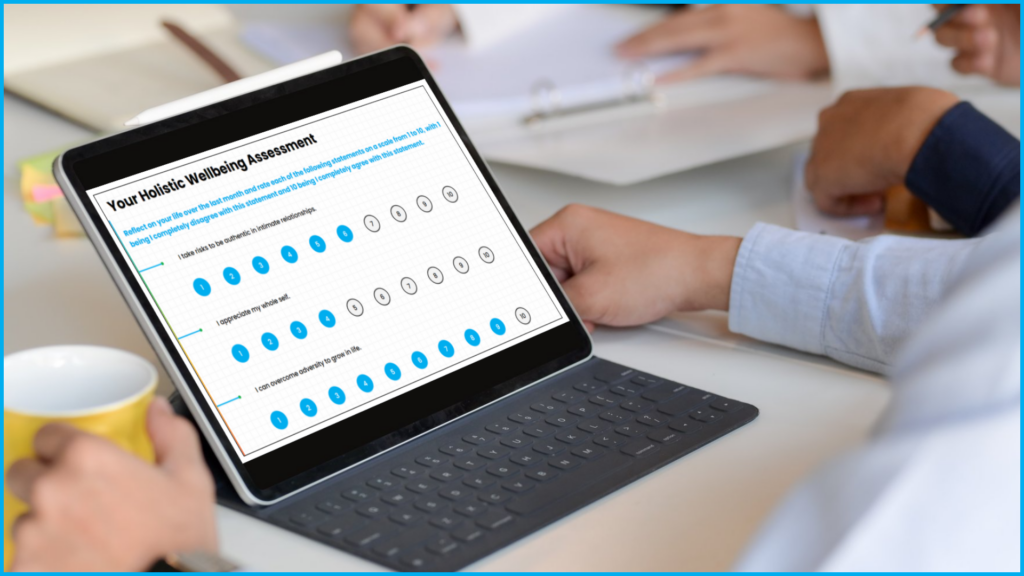
2) Measure wellbeing in a way that supports segmentation and trend
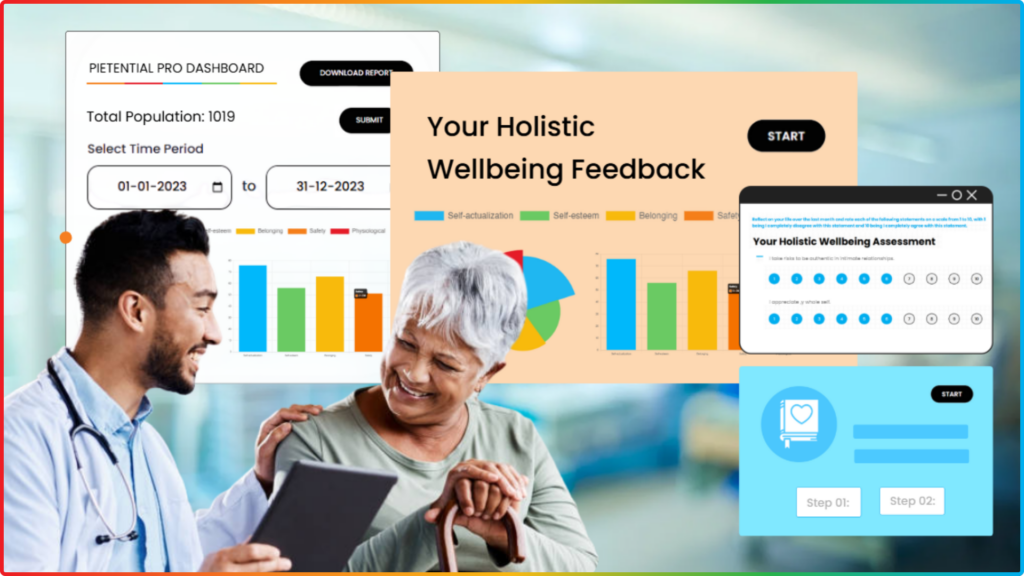
If you can’t trend wellbeing over time and segment it, you can’t isolate where benefits are helping and where they’re missing the mark.
This is the difference between reporting and decision support.
3) Evaluate equity: who gains value, who doesn’t
A benefits strategy can be generous and still inequitable in lived experience.
Leaders need visibility into:
- which cohorts show improvement
- which cohorts remain flat or worsen
- whether certain groups lack access, trust, or relevance
- where the gap between availability and adoption is greatest
Equity is not an add-on. It’s a core measurement requirement in modern employee wellbeing strategy.
4) Close the loop: adjust, reallocate, and prove change
The goal isn’t to “prove the program is good.” The goal is to learn what works, expand what helps, and redesign or retire what doesn’t.
When benefits measurement becomes iterative, ROI stops being a once-a-year defense. It becomes a management practice.
How to communicate this shift to Finance and executives
Executives tend to accept a simple logic:
- Participation shows engagement with the offering.
- Outcomes show impact on the workforce.
- Strategy requires outcome visibility.
If you frame your benefits story around “where we saw measurable improvement” and “where we saw gaps we are addressing,” you build credibility. You also make future investments easier to defend, because the organization can see that benefits are being managed with rigor.
Where Pietential fits
Pietential can act as a wellbeing intelligence layer that helps organizations move beyond participation reporting and toward outcome visibility—tracking employee wellbeing across key needs, identifying gaps across cohorts, and showing whether wellbeing is improving over time.
It does not replace your benefits ecosystem. It helps you measure whether that ecosystem is actually improving wellbeing—and where targeted adjustments are needed.