
Compensation is measurable. Loyalty is not.
In large organizations, retention conversations often begin—and sometimes end—with pay. When attrition rises, the reflex is familiar: adjust compensation bands, add retention bonuses, refine incentive structures.
Compensation matters. But if money alone created sustainable employee retention, organizations with competitive pay would never struggle with burnout, disengagement, or regrettable attrition.
The reality is more complex. Loyalty has multiple drivers, and compensation is only one of them.
The three drivers of commitment
Organizational research typically describes three types of employee commitment:
- Continuance commitment – staying because leaving would be costly (financially or professionally).
- Affective commitment – staying because of emotional attachment and belief in the organization.
- Normative commitment – staying out of a sense of obligation or shared values.
Compensation primarily influences continuance commitment. It increases the cost of leaving. But it does not necessarily increase belief, belonging, or trust.
In enterprise environments, especially with multi-generational workforces, affective commitment increasingly determines whether employees go beyond baseline performance—or quietly withdraw.
Why compensation-only retention strategies stall
There are three predictable limitations to compensation-led retention:
1) It is replicable
Competitors can match salary increases. They cannot easily replicate healthy team cultures, psychologically safe leadership, or meaningful growth pathways.
2) It doesn’t address burnout
An employee can be highly compensated and deeply exhausted. When stress remains chronic and unaddressed, salary adjustments delay attrition—but rarely eliminate it.
3) It creates inflationary cycles
Retention bonuses and reactive pay adjustments often trigger internal equity concerns, creating new tension points rather than solving the underlying drivers of departure.
This is where employee wellbeing enters the retention conversation—not as a perk, but as a structural factor.
Employee wellbeing as a retention lever
Workplace wellbeing influences affective commitment in ways compensation cannot:
- Perceived safety and fairness
- Sense of belonging
- Confidence in leadership
- Sustainable workload
- Opportunities for growth and self-actualization
When these conditions are stable, retention becomes less fragile. When they erode, no amount of compensation fully offsets the impact.
For CHROs and CFOs, this reframes the question. Instead of asking, “How much will it cost to retain talent?” the better question becomes:
“What conditions are driving our retention risk?”
Measurement vs assumption in retention strategy
Most organizations can see turnover. Fewer can see the upstream drivers of turnover early enough to act.
Retention metrics are lagging indicators. By the time they move, the damage is already visible.
Wellbeing intelligence, by contrast, provides leading signals—showing where stress, belonging gaps, safety concerns, or esteem erosion are clustering across teams or cohorts.
This is the difference between reacting to attrition and preventing it.
A more sustainable retention model
For organizations with 250–10,000+ employees, a stronger retention framework typically includes:
1) Compensation alignment
Ensure pay is competitive and fair. Compensation inequity will undermine every other effort.
2) Cohort-level wellbeing visibility
Segment by role family, department, tenure band, and manager ecosystem. Identify where wellbeing trends are declining before exits occur.
3) Leadership accountability
Tie retention discussions to operating conditions—not just compensation reviews.
4) Impact validation
After interventions—whether pay adjustments, workload redesign, or manager enablement—measure whether employee wellbeing improves in the affected cohorts.
Retention becomes more predictable when the system, not just the salary, is managed.
Where Pietential fits
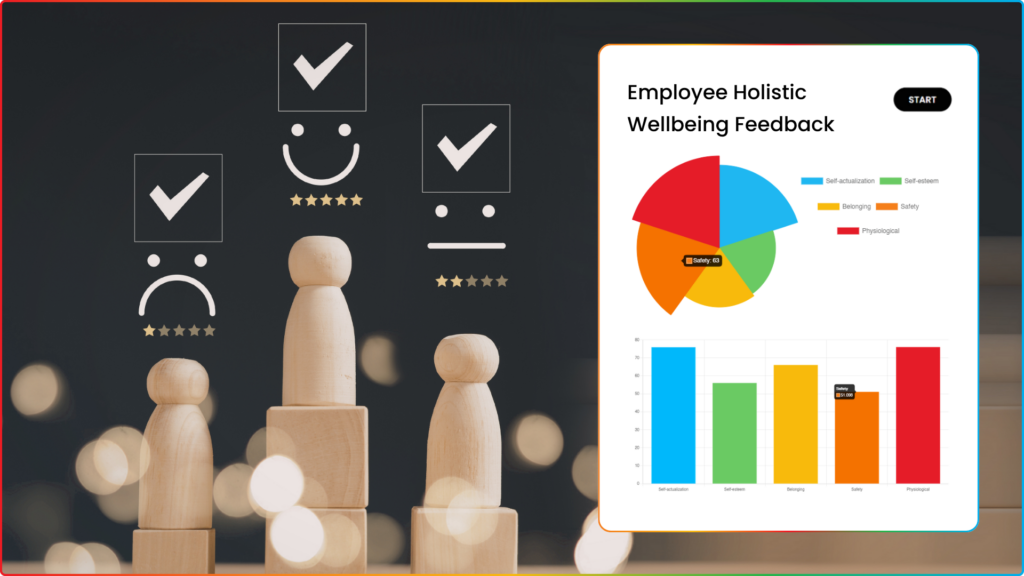
Pietential provides a wellbeing intelligence layer rooted in Maslow’s hierarchy of needs—helping organizations objectively measure conditions tied to retention risk, segment by cohort, and track change over time.
It does not replace compensation strategy. It helps leaders understand whether improvements in wellbeing are reducing retention risk—and where further action is needed.