

“What if you could measure the wellbeing of your university community early enough to guide support, prove program impact, and strengthen student success?”
“Is our school community back to normal yet? And how do we know?”
“My goal is for Pietential to help schools benchmark the baseline wellbeing of students, faculty, and staff across the U.S. This way, in the event of a major on-campus incident (like a mass shooting or hate crime) schools can effectively utilize counseling resources and track when wellbeing has returned to pre-incident levels, providing a clear indicator for when performance can be expected to return to normal.”
– John Starling, Founder & CEO
Pietential is an evidence-based, holistic wellbeing assessment platform inspired by Maslow’s Hierarchy of Needs. It empowers universities to assess, understand, monitor, and visualize the holistic wellbeing of their cohorts, including students, faculty, and staff. By using Pietential, universities can demonstrate internal program efficacy, compare the wellbeing of demographic cohorts within the university community, make data-driven decisions, and foster a culture of wellbeing across their campuses.
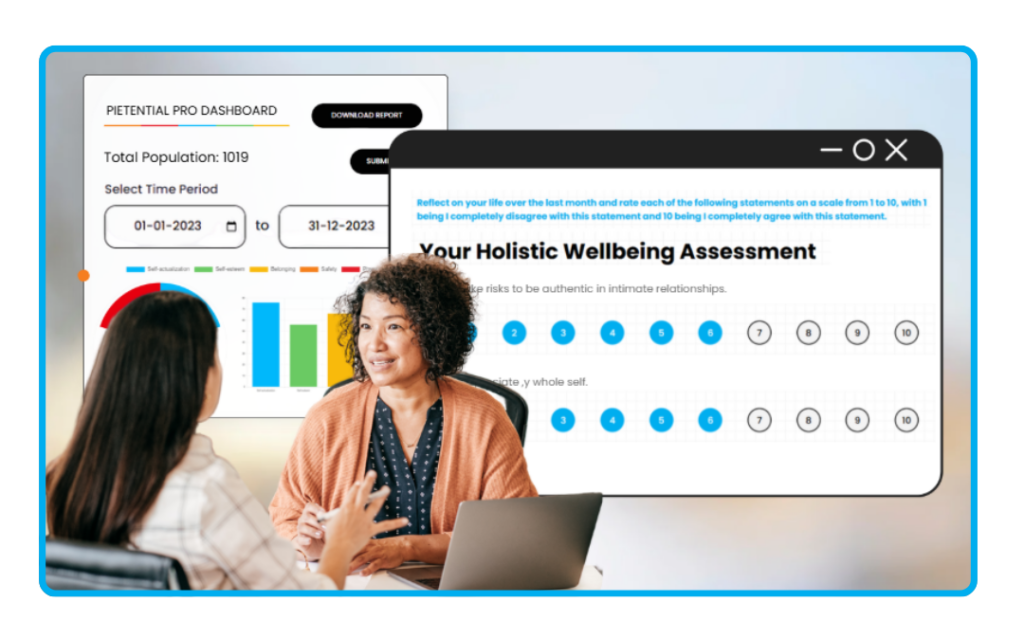
University Use Cases with Pietential
Wellbeing Assessment Before and After a Campus Safety Incident
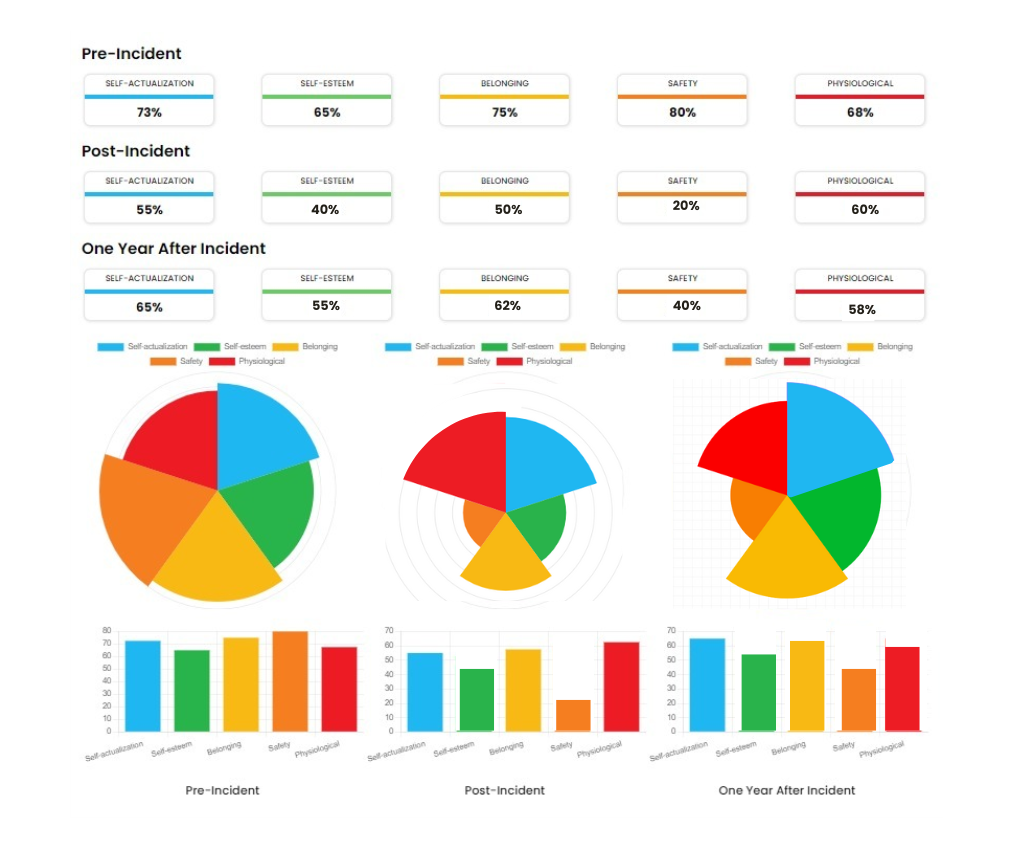
A university using Pietential benchmarked the overall wellbeing of students, faculty, and staff across all domains – physiology, safety, belonging, esteem, and self- actualization. Pre-incident assessments, represented in Pie Chart 1, indicate a healthy, vibrant campus community, with wellbeing scores balanced across all markers.
However, following an unfortunate campus safety incident, the university saw a significant drop in these wellbeing domains, which is reflected in Pie Chart 2. Safety and belonging took the sharpest declines, with esteem and self-actualization also dipping, as the incident triggered feelings of insecurity and distrust among the community.
One year after the incident, the wellbeing results show improvement in the community’s wellbeing, but the pre-incident levels have not yet been fully restored. While physiology and self-esteem markers show progress, safety and belonging still lag behind, indicating that the recovery is ongoing and multifaceted.
How Pietential Supports Holistic Wellbeing Recovery
Pietential plays a critical role in the assessment, development, and monitoring of holistic wellbeing, especially in scenarios like these. By continuously measuring wellbeing across various domains, universities can identify specific areas—such as safety and belonging—where intervention is still necessary, even a year after the incident. Ultimately, Pietential helps institutions understand why performance may not fully recover until wellbeing is restored.
For example, students’ grades might remain below pre-incident levels because their sense of safety and belonging has not fully rebounded, which impacts their focus and engagement. Pietential provides the data to identify and address these gaps, enabling universities to offer the specific support students need the most. This ensures that wellbeing improvements are sustained over time, guiding students back to a thriving academic and social environment.
Additional University Use Cases with Pietential
Gap Analysis and Comparative Analysis:
Universities can conduct gap analyses and comparative assessments to understand variations in wellbeing across different segments of their populations, such as students from diverse cultural backgrounds, students enrolled in specific courses or programs, and individuals from varying socio-economic backgrounds within the university ecosystem.
Program Monitoring and Evaluation:
Pietential empowers universities to benchmark wellbeing right from the start of student support programs, including those focusing on diversity, equity, inclusion, and belonging(DEI&B) and the overall enhancement of campus wellness. It aids in designing targeted interventions based on assessment results, monitors progress throughout these programs, and measures post-program improvements to showcase the efficacy of these initiatives in fostering student success and a supportive campus environment.
Impact Measurement:
By quantifying holistic wellbeing effectively, Pietential enables universities to measure and demonstrate the impact of their initiatives, thereby facilitating informed decision-making and garnering support from stakeholders.
Key Features of the Pietential Holistic Wellbeing Platform
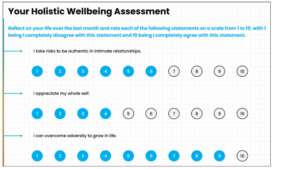
Holistic Wellbeing Assessment: The platform provides a quick and comprehensive assessment of individuals’, cohorts’ and total population wellbeing, covering dimensions such as physiology, belonging, safety, self-esteem, and selfactualization.
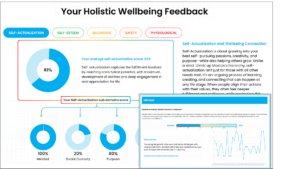
Real-time Feedback and Coaching: Users receive immediate visual and written feedback and access to personalized personal growth exercises aligned with their wellbeing assessment results, promoting continuous personal growth and development.
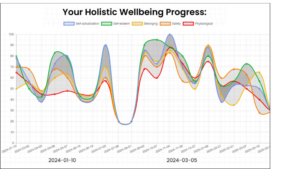
Data Visualization and Monitoring: Pietential’s administrative dashboard generates insightful data visualizations, including pie charts, bar graphs, and trend lines, to track and benchmark wellbeing progress over time at the individual, demographic cohorts, and total population levels within the university community.
Cohort Development and Analysis: Universities can create tailored user groups or “cohorts” for targeted demographic analyses, enabling them to understand and address unique wellbeing needs across different segments of their population.
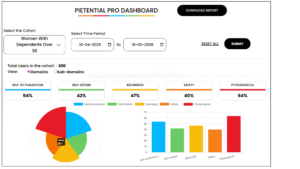
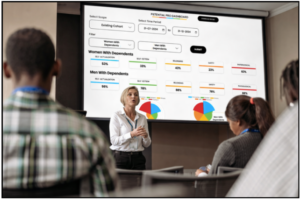
Comparative Analytics: The platform enables in-depth comparative analyses of wellbeing across diverse demographic groups and time periods, facilitating the identification of trends and informing the design of targeted interventions by the university.
Wellbeing Threshold Alerts: Pietential serves as an early warning system by notifying administrators of any declining wellbeing trends at the individual, cohort or total population levels, allowing for timely support and intervention strategies.
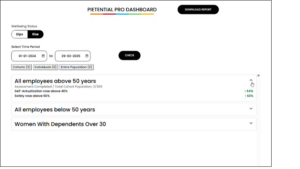
Ease of Use and Custom Demographics: The platform offers a user-friendly setup process, ensures anonymized aggregate data for privacy protection, provides comprehensive reporting features, and allows for custom demographic selection to suit the university’s specific needs.
Proving Impact with India
Pietential Holistic Wellbeing Platform is revolutionizing how universities approach wellbeing assessment, monitoring, and program evaluation, ultimately fostering a healthier and more supportive environment for their communities.
Pulse – Wellbeing of Social Work Students

“Pulse” (an NGO in India) partnered with Pietential to help them assess the holistic wellbeing of social work students. By using Pietential’s platform, Pulse gained insights into students’ emotional, social, and psychological needs, leading to targeted interventions such as stress management workshops, mental health support, and peer counseling programs.
Synergy Sanstha – Psychosocial Impact of Tribal Youth Programs

Synergy Sanstha focuses on empowering tribal youth through education and skill development initiatives. Synergy Sanstha collaborated with Pietential to assess the psychosocial impact of their programs on tribal youth. The study is ongoing.
Learn more about Pietential and Our Team, schedule a Demo Call.