
Employee engagement scores are the most widely used workforce metric in Organizations today. They’re reported in board presentations, benchmarked against industry peers, and used to evaluate the success of people strategies. They are also, in many cases, the primary reason leadership teams are consistently surprised by workforce problems.
The engagement score isn’t a bad metric. It’s a lagging one. And treating a lagging indicator as a leading one creates a specific and expensive Organizational blind spot.
What engagement scores actually measure
Engagement surveys measure how employees feel about their work at the point in time the survey was completed — filtered through what they believe is safe and acceptable to report.
This means engagement scores are shaped by three different dynamics simultaneously: actual workforce conditions, social desirability effects (people reporting what they think leadership wants to hear), and the natural lag between when conditions change and when perceptions fully reflect that change.
The result is a metric that systematically underestimates risk, arrives late, and conflates multiple workforce conditions into a single score that’s difficult to act on with precision.
What engagement scores miss
The conditions that matter most for workforce stability — psychological safety, manager health, confidence trajectories, belonging patterns, workload absorption — are upstream of engagement. They determine what engagement will look like in the next cycle.
By the time engagement drops significantly, burnout is often already established. Trust has already eroded. Key employees are already in the late stages of deciding whether to stay. The engagement score confirms what the conditions were — not what they are or where they’re heading.
The ‘good score, bad outcomes’ problem
One of the most consistent patterns in workforce data is that Organizations maintain acceptable engagement scores while simultaneously experiencing rising attrition, declining productivity, and increasing burnout. This isn’t a measurement error. It’s what happens when a lagging indicator is used as a primary signal.
Engagement scores average across populations, across time, and across conditions. They can remain stable while specific teams deteriorate, while certain populations approach exhaustion, and while the conditions that will drive next quarter’s attrition are already forming.
The engagement score problem isn’t that the metric is wrong. It’s that it’s being used to answer a question it wasn’t designed to answer: ‘how is our workforce doing right now, and where is risk forming?’ That requires earlier signal, at higher resolution, measuring upstream conditions — not downstream outcomes.
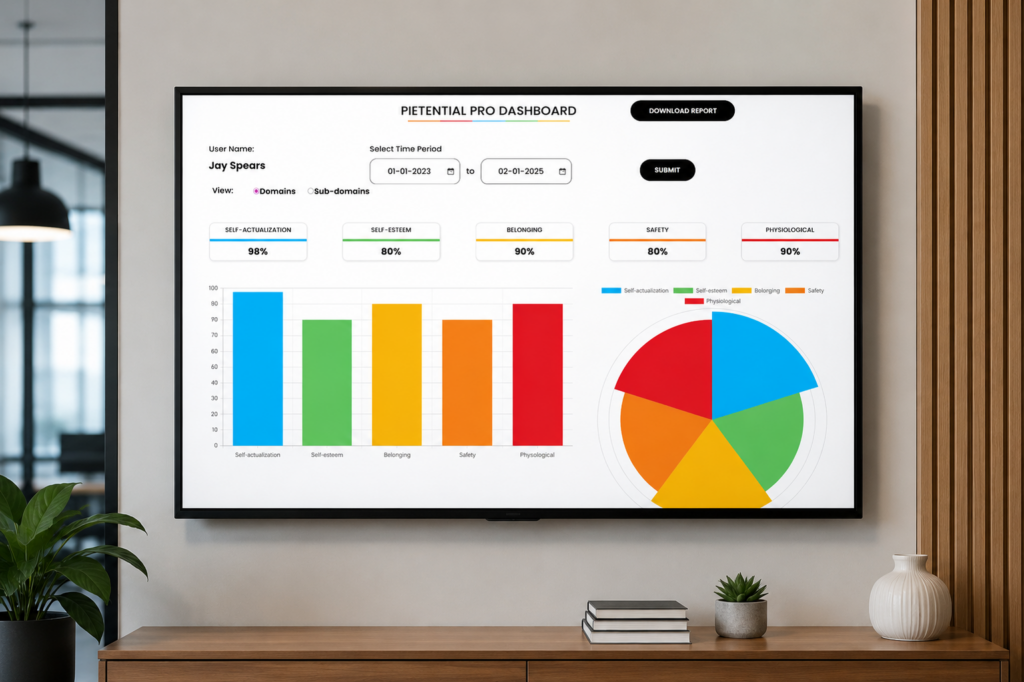
Pietential provides the upstream measurement layer that sits above engagement — capturing the workforce conditions that determine what engagement, attrition, and performance will look like before they change. Learn more at pietential.com.