
Pietential FOR NONPROFITS &
MISSION-DRIVEN ORGANIZATIONS
Live Webinar
Help Shape Wellbeing Risk Intelligence for VSOs
Thursday, 12th November, 2026 · 12:00 PM – 1:00 PM EST
Bring Wellbeing Intelligence Into Your Mission

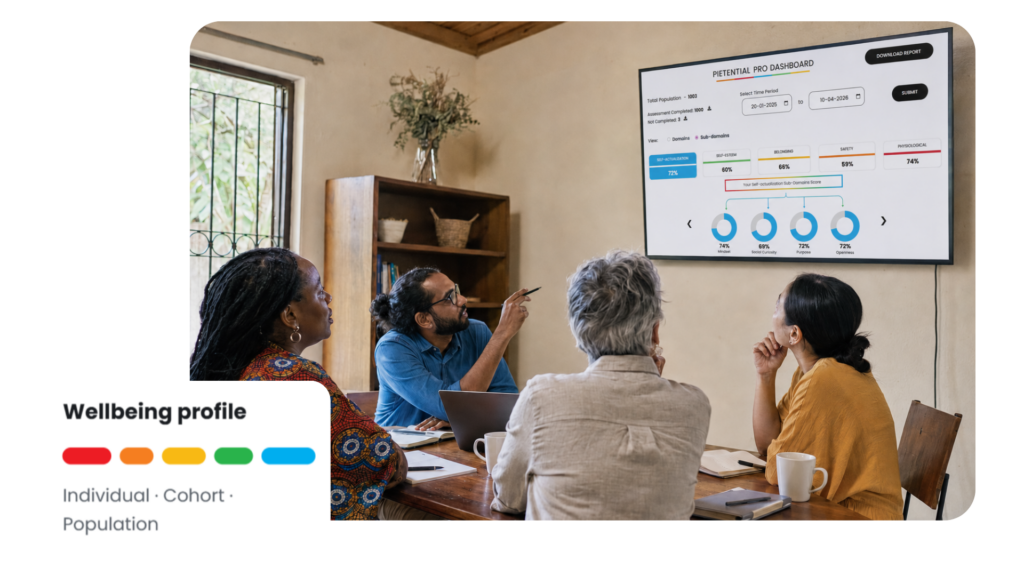
A Clear Wellbeing Baseline
Establish a whole-person baseline across the people you serve, giving your team a clearer picture of needs before, during, and after support.
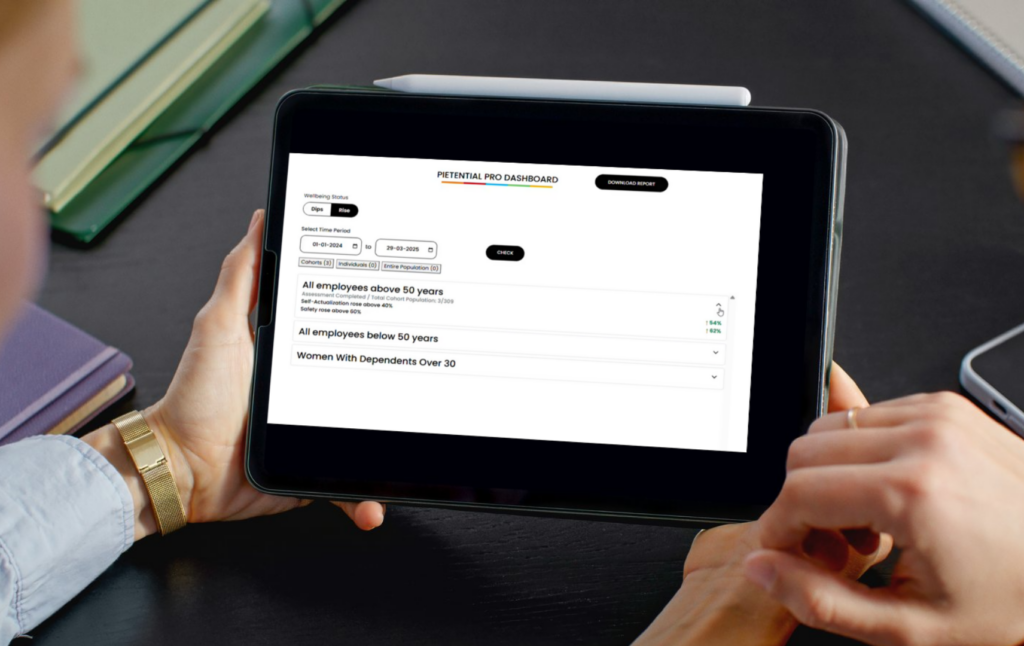
A Record of Wellbeing Change
Track how wellbeing shifts over time to see where people are improving, where progress has stalled, and where more support may be needed.
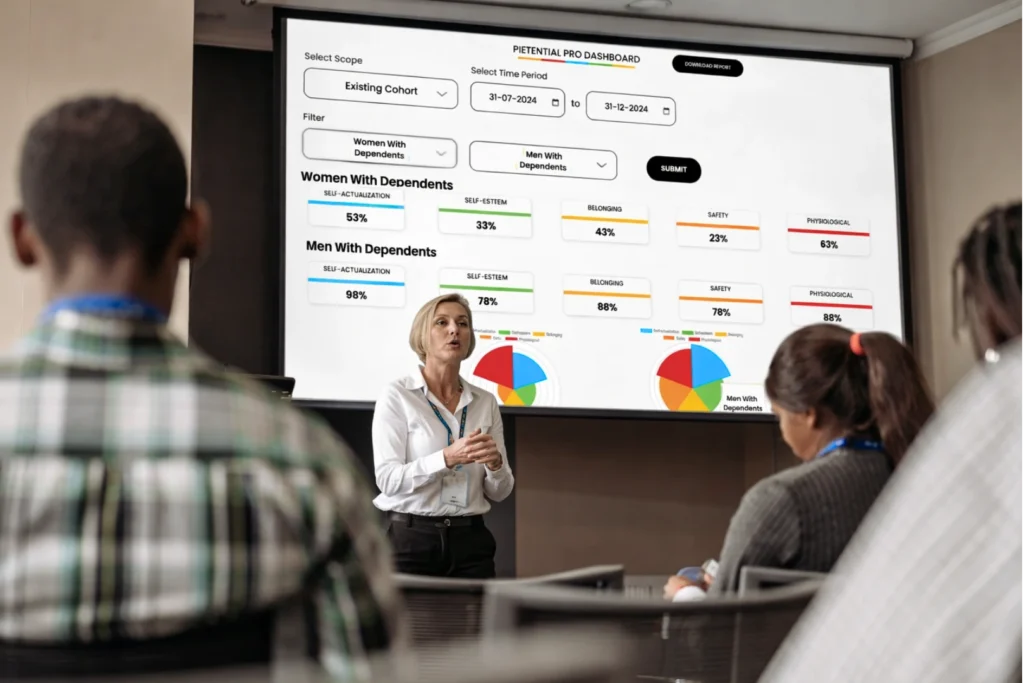
Individual, Cohort & Population Insight
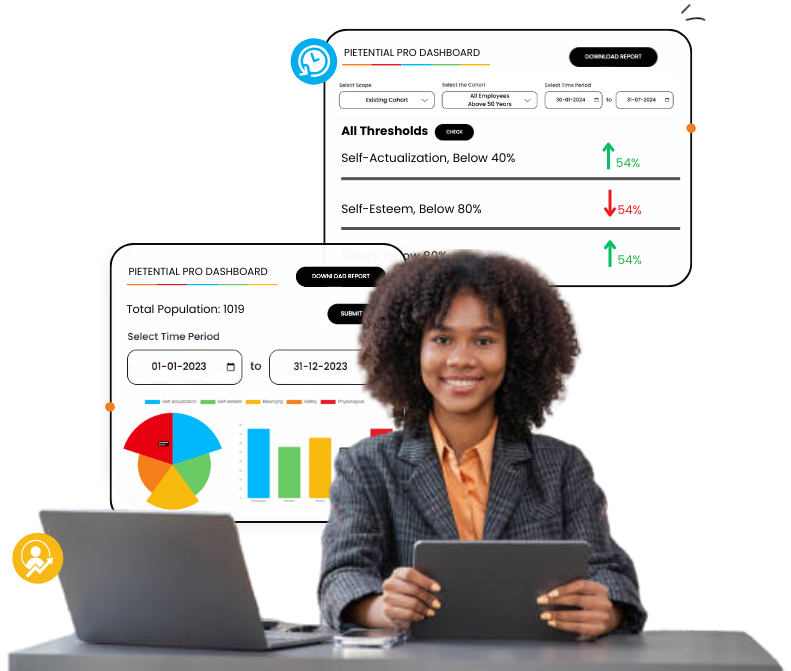
Move from individual wellbeing to specific cohorts and your broader population to understand patterns without losing sight of the people behind the data.
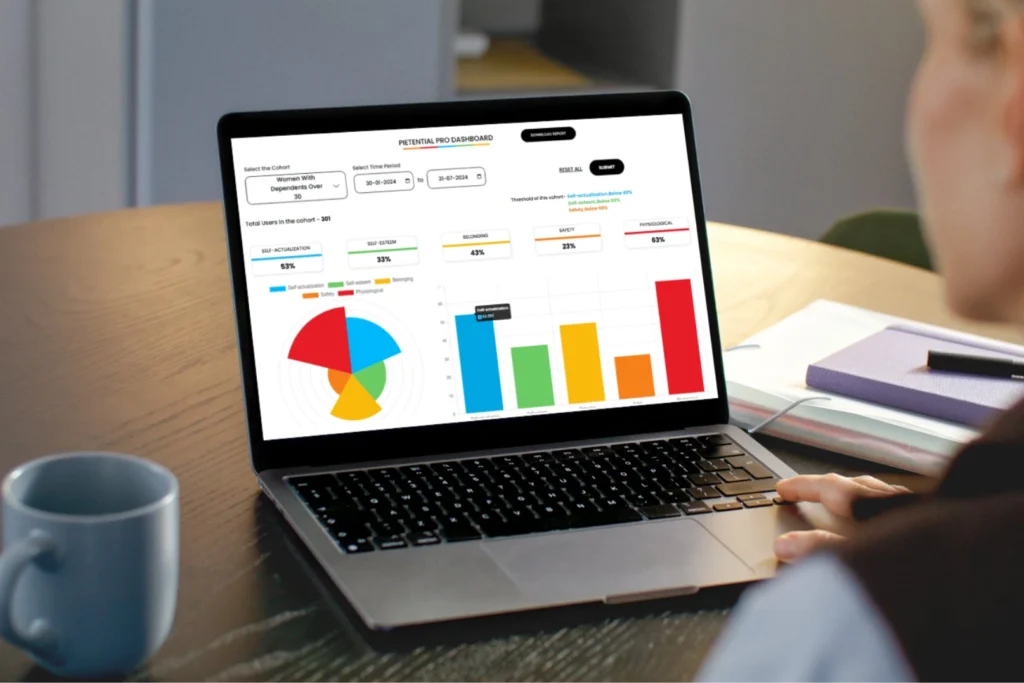
Earlier Visibility Into Need
See changes in areas such as safety, belonging, self-esteem, and purpose before they become visible through participation numbers or program outcomes.
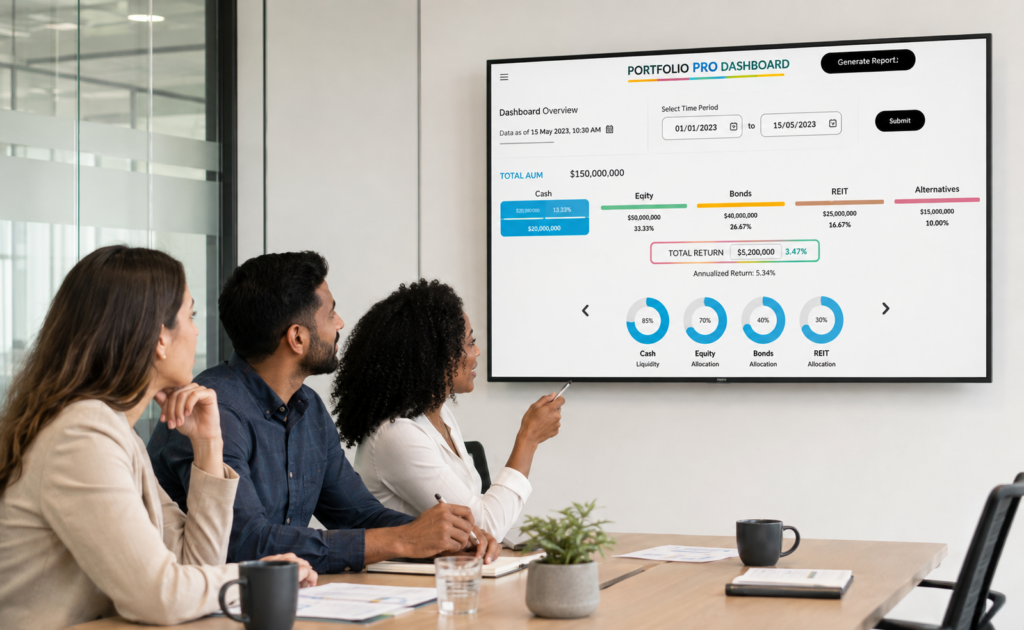
Measurable Program Impact
Compare wellbeing from baseline to understand whether the people participating in your programs are actually experiencing meaningful change.
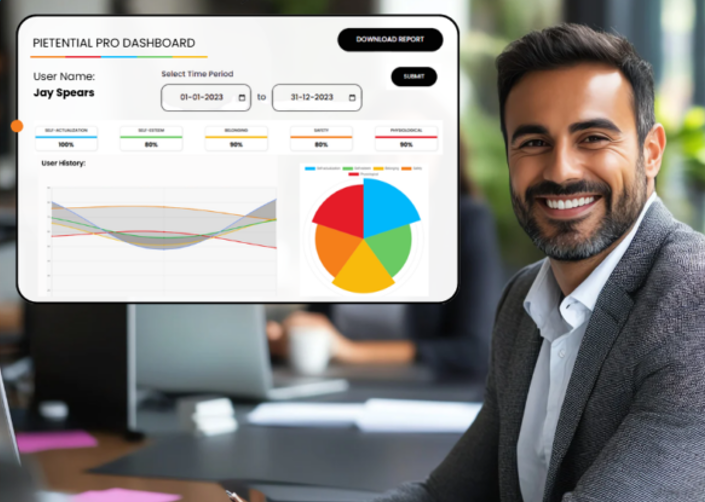
Stronger Evidence for Funders
Bring objective wellbeing outcomes into grant reporting, board conversations, and funding discussions to show what changed, not only what was delivered.
Why It Works
Measure the Change Your Programs Create
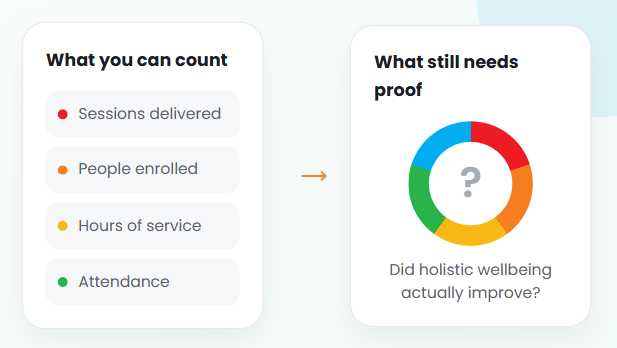
Go beyond attendance, enrollment, sessions delivered, and services provided to measure the actual shift in wellbeing.
See Where Wellbeing Needs Attention
See wellbeing patterns across individuals, cohorts, programs, and populations, so limited resources can be directed with greater clarity.
Creates Credible Evidence of Impact
Build a longitudinal record of wellbeing change that strengthens program evaluation, reporting, and conversations with boards and funders.
How it Fits Into Your Programs
Establish the Baseline
Measure whole-person wellbeing at the beginning of a program or service to understand where people are starting.
Understand the Need
Use wellbeing data to identify strengths, emerging needs, and patterns across the people and communities you serve.
Monitor Change
Reassess at meaningful points to see which cohorts are improving and where progress may be falling behind.
Evaluate Program Impact
Compare wellbeing over time to add measurable human outcomes to your existing program and service data.
Communicate the Evidence
Use anonymized, aggregated Wellbeing Intelligence to strengthen impact reports, board updates, grant reporting, and funding conversations.
Built For Mission-Driven Organizations
Questions nonprofit leaders ask
What is Wellbeing Intelligence for nonprofits?
Wellbeing Intelligence is objective, longitudinal data that shows how whole-person wellbeing is changing across the people you serve. It gives organizations visibility at individual, cohort, and population levels so leaders can understand needs, monitor change, and evaluate outcomes.
How is this different from tracking program participation?
Participation tells you who showed up, how many services were delivered, or how many people completed a program. Wellbeing measurement answers a different question: what changed in the lives of the people you served?
Can we compare different programs or cohorts?
Yes. Wellbeing can be viewed across cohorts and populations, helping you understand patterns and compare how wellbeing changes across the groups you serve.
Can Pietential help with grant reporting and funding?
Pietential gives you objective wellbeing outcomes that can complement your existing program metrics in grant reports, impact reports, board updates, and funding conversations.
Does Pietential replace our programs?
No. Pietential is the measurement layer, not the intervention. Your organization delivers the programs and support. Pietential helps you measure how wellbeing changes over time.
Can we identify people who may need more support?
Wellbeing patterns can show where areas such as belonging, safety, self-esteem, or purpose are declining or remaining low, giving your team earlier visibility into where additional attention may be needed.
Is this only for veteran-serving organizations?
No. Veteran organizations are one use case. Pietential can support any mission-driven organization focused on improving human wellbeing, including youth and family services, housing programs, behavioral health and recovery services, community organizations, aging services, disability organizations, foundations, and funders.
Related Articles
“What becomes possible when you can see where veterans need...