Money can solve immediate problems.
If employees are under financial strain, compensation adjustments help. If mental health access is limited, expanding benefits helps. If engagement is low, launching programs helps.
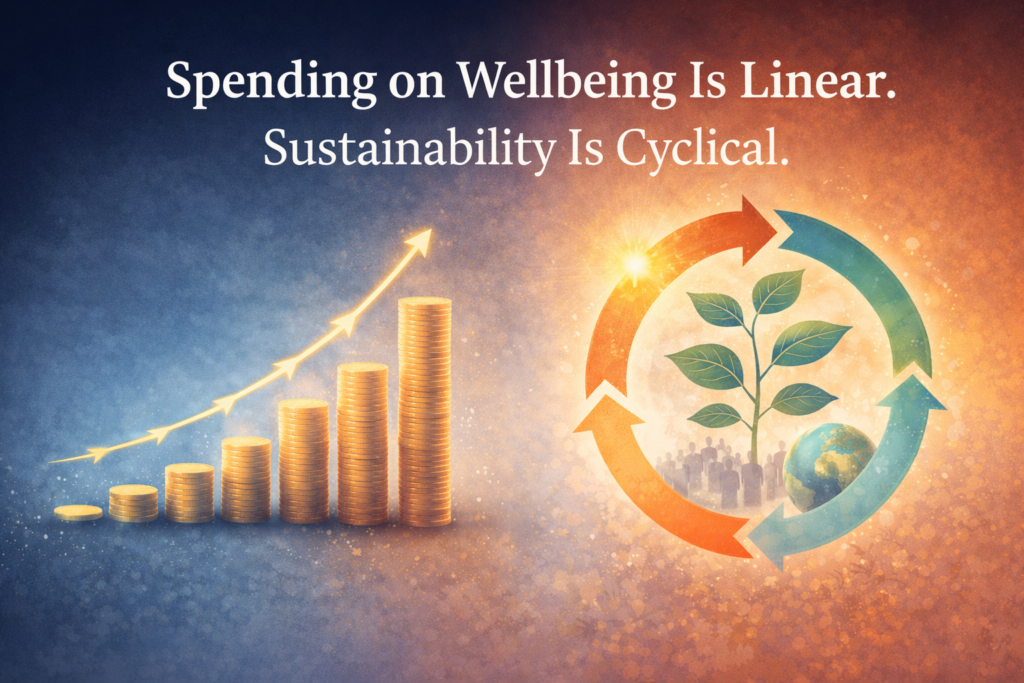
But spending is linear. Sustainability is cyclical.
For enterprise organizations, this distinction matters. You can continuously increase investment in workplace wellbeing and still fail to create lasting workforce stability.
Why spending alone doesn’t create sustainability
Consider two approaches:
- Reactive spending: increasing benefits after burnout spikes.
- Sustainable strategy: identifying structural drivers of stress before they escalate.
The first consumes budget. The second protects it.
Spending addresses symptoms. Sustainability addresses systems.
The workforce sustainability equation
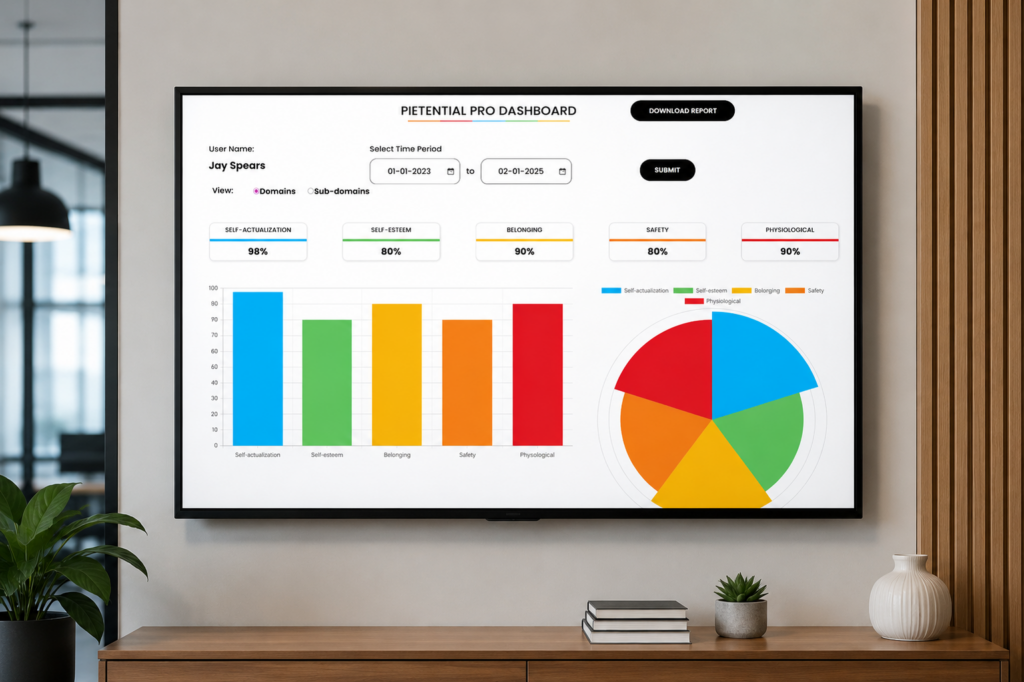
Sustainable employee wellbeing depends on whether core needs are consistently met:
- Physiological balance (manageable workload, recovery time)
- Safety (job security, fairness, psychological safety)
- Belonging (inclusion, team cohesion)
- Esteem (recognition, growth opportunities)
- Self-actualization (purpose, development pathways)
If these needs fluctuate widely across teams or cycles, instability follows—regardless of benefit spend.
The risk of equating generosity with impact
Generous benefits do not automatically translate to stable outcomes.
Organizations may invest heavily yet still experience:
- rising burnout
- uneven inclusion experiences
- high performer attrition
- manager overload
- cultural fragmentation
Why? Because sustainability depends on alignment, not volume.
Benefits that do not align with actual cohort needs may be underutilized or fail to influence root drivers.
Linear vs cyclical thinking in workforce strategy
Linear thinking asks:
“How much are we spending?”
Cyclical thinking asks:
“Are conditions improving over time—and reinforcing themselves?”
In sustainable systems:
- Improved wellbeing reduces burnout risk.
- Reduced burnout strengthens engagement.
- Stronger engagement improves performance.
- Improved performance reinforces retention.
- Stable retention protects workload balance.
This cycle compounds positively.
In reactive systems, the cycle reverses.
Measuring sustainability instead of effort
Sustainability requires longitudinal visibility.
Leaders should be able to answer:
- Are wellbeing scores trending upward, stable, or declining?
- Which cohorts show persistent vulnerability?
- Do interventions produce measurable change?
- Are equity gaps widening or narrowing?
Without trend and segmentation, spending decisions remain speculative.
Embedding sustainability into operating rhythm
To move from spending to sustainability:
1) Establish a baseline across core wellbeing dimensions
Not just engagement or satisfaction—but holistic indicators.
2) Review trends at leadership cadence
Quarterly or bi-monthly review cycles aligned to business planning.
3) Align investments to visible gaps
Redirect resources where need is measurable—not assumed.
4) Validate impact before scaling
Expand only what demonstrably improves workforce wellbeing.
This is how wellbeing shifts from expense to strategic asset.
Where Pietential fits
Pietential provides a wellbeing intelligence framework rooted in Maslow’s hierarchy of needs—helping organizations track holistic employee wellbeing over time, identify cohort-level gaps, and evaluate whether investments are creating sustainable improvement.
It does not replace benefits or programs. It helps leaders determine whether those efforts are building a reinforcing cycle—or merely adding linear spend.