Organizations are investing more in employee wellbeing than at any point in the last decade. Mental health platforms, resilience programmes, expanded EAP benefits, manager wellbeing training. The investment is real — and growing.
So why is burnout still rising?
The answer is uncomfortable but increasingly hard to ignore: most Organizations are measuring activity, not conditions. And the difference between those two things explains almost everything.
What activity measurement looks like
Activity measurement tells you how many employees accessed a wellbeing platform this quarter. How many completed a resilience course. How many used their mental health benefit.
This data is easy to collect and easy to report. It also tells you almost nothing about whether workforce conditions actually improved.
An employee can access a mindfulness app three times a week and still be operating under unsustainable workload pressure. A team can have 90% EAP utilisation and still have a manager who is quietly burning out and spreading that pressure through every interaction.
Activity is visible. Human conditions usually aren’t. And that asymmetry is where the investment-outcome gap lives.
What condition measurement looks like
Condition measurement asks different questions. Not ‘did employees use the resource?’ but ‘is workload pressure declining?’ Not ‘how many completed the training?’ but ‘are managers becoming more sustainable leaders?’
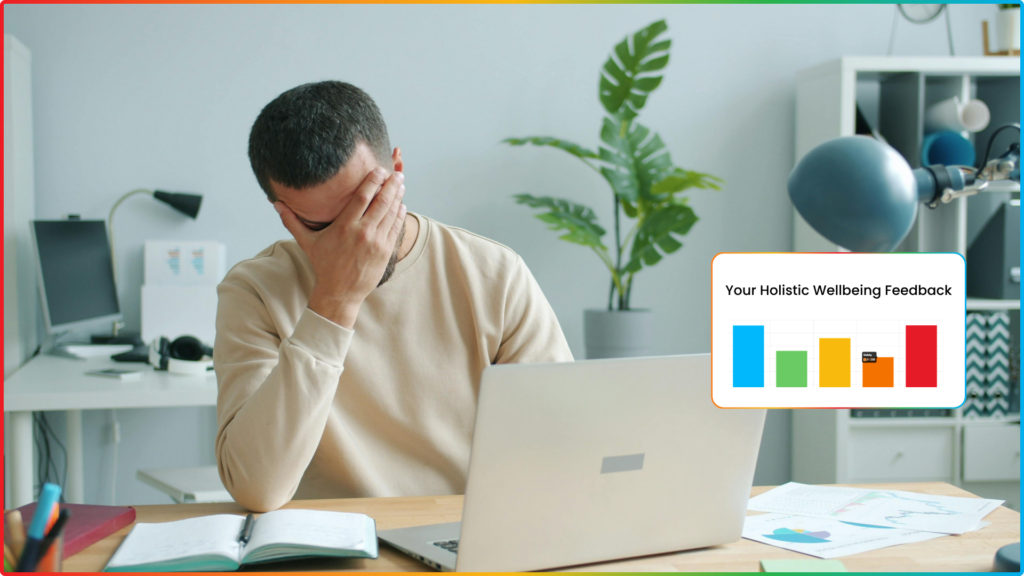
The conditions that matter most — psychological safety, confidence, trust, workload capacity, manager health, belonging — are measurable. They’re just not what most current systems are built to capture.
And they’re the upstream signals that determine what engagement, attrition, and performance will look like in three to six months.
Why the gap persists
Part of the reason Organizations default to activity measurement is structural. Activity is easier to quantify, easier to report to boards, and easier to tie to vendor relationships.
Part of it is that most wellbeing platforms have a commercial interest in utilisation. High utilisation looks like success — regardless of whether conditions are improving.
And part of it is that leadership teams haven’t yet been given a clear alternative framework. If the question ‘is our wellbeing investment working?’ can only be answered with programme metrics, most leadership teams will accept that answer — even when it doesn’t explain the burnout trend continuing to climb.
What to do differently
The shift starts with separating measurement from intervention. Asking not just ‘what are we running?’ but ‘what signal would tell us whether conditions are changing?’
This means looking upstream — at the conditions forming before they become engagement drops or attrition spikes. It means measuring at the population level, not just tracking individual usage. And it means being willing to accept a measurement infrastructure that’s independent of the interventions you’re running.
The Organizations beginning to close the investment-outcome gap aren’t necessarily spending more. They’re measuring earlier, and measuring the right things.
If your wellbeing investment isn’t producing the workforce outcomes you expected, the question worth asking isn’t ‘which programme should we add?’ It’s ‘what would tell us whether any of it is working?’ That’s a harder question. It’s also the more useful one.
Pietential is built to answer that question — with objective, upstream workforce condition measurement that gives leadership teams real visibility into whether their people strategy is working. Explore the framework at pietential.com or connect with our team.