

“What would change if your people analytics could measure the wellbeing conditions behind productivity, engagement, retention, and performance before those outcomes begin to shift?”
Executive Summary
In today’s rapidly evolving business landscape, organizations are increasingly recognizing the critical importance of employee wellbeing in driving success and sustainability. As senior officers responsible for shaping the future of human resources, you understand that traditional people analytics tools often fall short in capturing the full spectrum of factors that influence organizational performance. While metrics such as productivity and engagement are essential, they only scratch the surface of what truly matters – the holistic wellbeing of employees.
This white paper explores the concept of People Analytics for People Who Care About People, focusing on the imperativeness of prioritizing holistic wellbeing in organizational strategy. We delve into the limitations of traditional people analytics tools, the interconnectedness of wellbeing with other key metrics, and the transformative potential of adopting a more holistic approach to people analytics with Pietential. By incorporating Pietential into organizational strategy, companies can harness its features and benefits to prioritize wellbeing, foster a culture of care and support, and ultimately drive long-term organizational performance.

Introduction
The traditional approach to people analytics has typically focused on metrics such as productivity, engagement, turnover rates, and performance indicators. While these metrics are undoubtedly important, they often overlook the underlying factor that influences them all – employee wellbeing. Holistic wellbeing encompasses physical, mental, emotional, and social dimensions, all of which are intricately linked to individual and organizational success. Organizations that fail to recognize this miss out on crucial opportunities to optimize performance and employee satisfaction.

Limitations of Traditional People Analytics
Traditional people analytics tools often fail to capture the full complexity of human experience and wellbeing. By solely focusing on quantifiable metrics, they overlook the qualitative aspects of employee life that significantly impact performance and satisfaction. A highly engaged employee, for example, may still experience burnout due to an excessive workload or lack of work-life balance, highlighting the limitations of engagement as a standalone metric. Similarly, turnover metrics may signal an issue, but they do not provide the insights needed to address root causes effectively.
Interconnectedness of Wellbeing with Organizational Outcomes:
Research has consistently shown that employee wellbeing is strongly correlated with organizational outcomes such as productivity, engagement, innovation, and retention. Organizations with higher levels of employee wellbeing report lower absenteeism, reduced turnover rates, and higher job satisfaction. By prioritizing wellbeing, companies foster a culture where employees are more engaged, healthier, and more committed to organizational goals. This investment in wellbeing yields tangible benefits, including increased creativity, resilience, and collaboration within teams
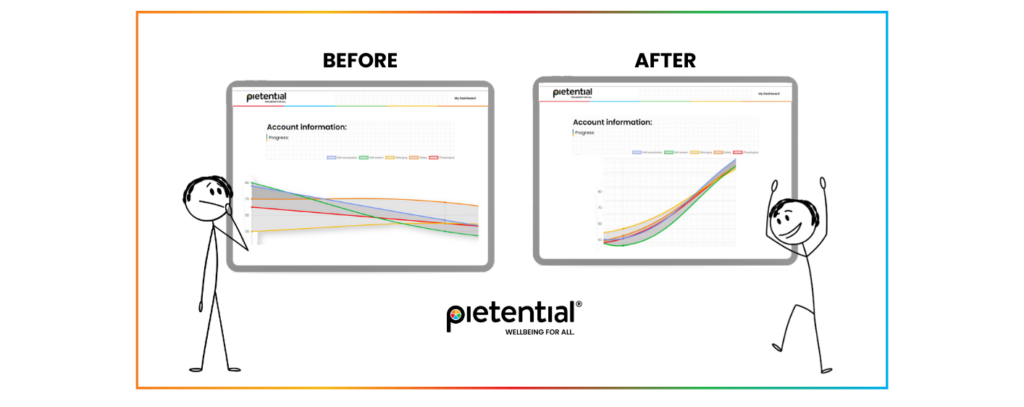
Transformative Potential of Holistic Wellbeing in People Analytics with Pietential
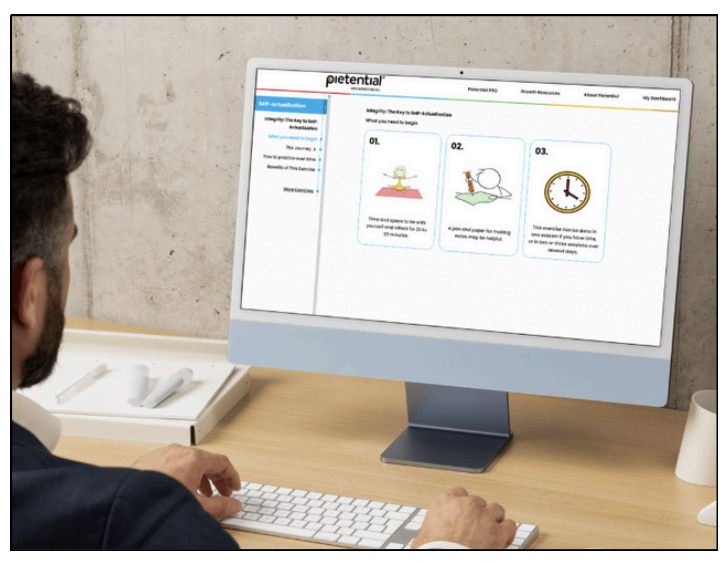
By adopting a more holistic approach to people analytics with Pietential, organizations can unlock transformative potential and gain a competitive edge in the marketplace. Pietential offers a comprehensive wellbeing benchmarking, improvement, and monitoring platform designed to empower individuals and organizations to enhance overall wellbeing. Its features and benefits include:
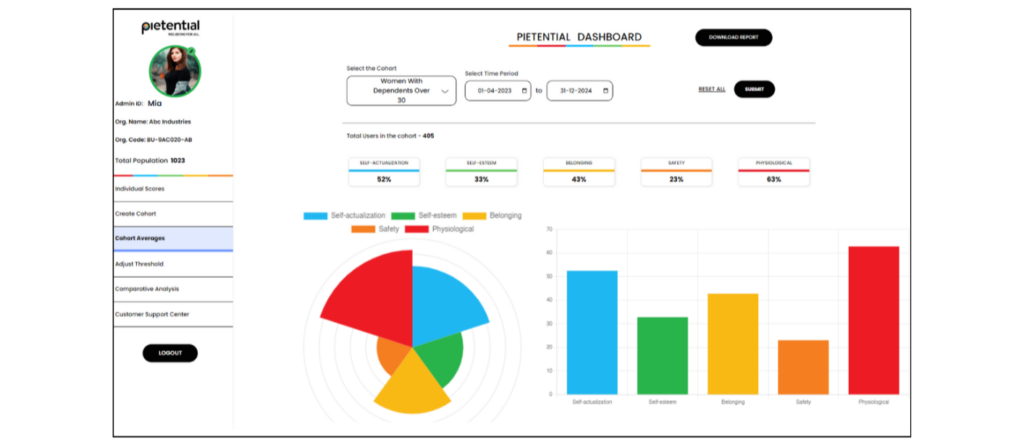
Benchmarking
- Pietential helps organizations set a baseline wellbeing benchmark, providing a clear reference point for measuring progress over time. Leadership gains data-driven insights to spot trends, address wellbeing gaps, and implement targeted interventions that enhance employee satisfaction and performance. With longitudinal analytics, organizations can track the impact of wellbeing initiatives, ensuring a strategic, measurable approach to workforce wellbeing.
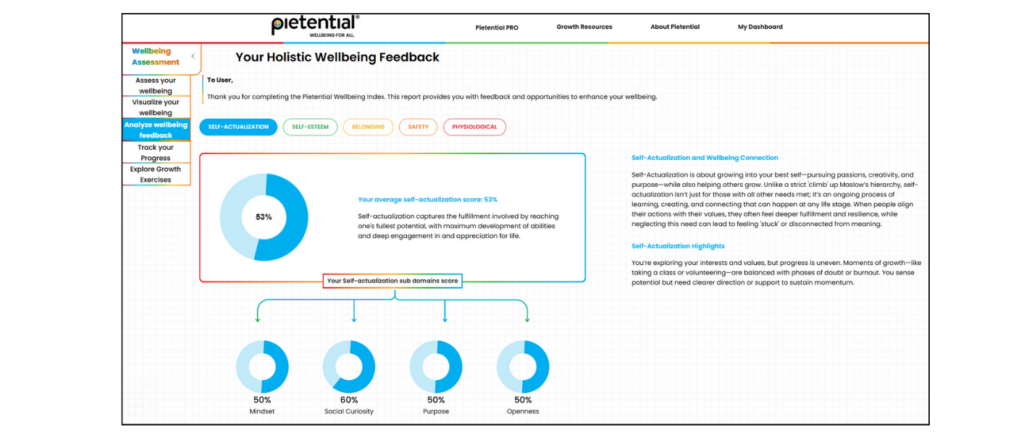
Improvement Tools
- The platform provides tools and resources for improving wellbeing, including personalized wellbeing visualization, feedback, and access to content geared towards enhancing various aspects of wellbeing. These tools help create actionable pathways for individuals and organizations to strengthen employee support systems.
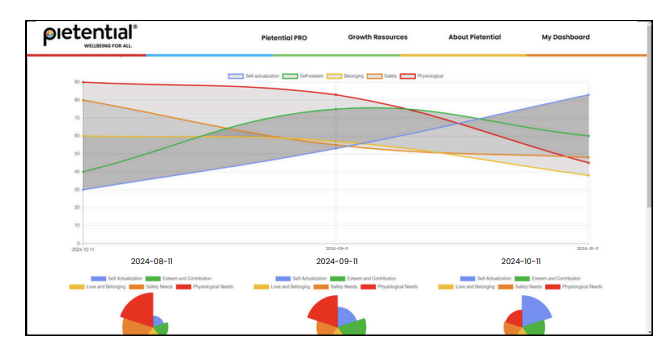
Monitoring and Insights
Pietential enables users to track and monitor wellbeing metrics over time, identifying trends, patterns, and areas for improvement. Users can visualize their progress through intuitive dashboards and reports, allowing organizations to proactively address emerging issues before they impact performance.
Integration and Customization
Pietential can be integrated with existing systems or platforms and customized to align with the specific goals, values, and culture of the organization. This ensures that organizations can seamlessly embed wellbeing into their broader people analytics and HR strategy.
Practical Strategies for Prioritizing Wellbeing in Organizational Strategy
Cultivate a Culture of Wellbeing
Pietential empowers organizations to cultivate a culture of wellbeing by providing tools and resources for promoting holistic wellbeing that influences work-life balance, open communication, and mental health support. Leaders can use data-driven insights to identify areas where support structures need strengthening and implement targeted interventions.
Invest in Wellbeing Programs and Initiatives
Pietential enables organizations to invest in wellbeing programs and initiatives tailored to the unique needs of their employees. By leveraging the platform’s insights, organizations can develop initiatives that resonate with employees, fostering a positive work environment and improving long-term retention.
Incorporate Wellbeing into Performance Management
Pietential helps organizations incorporate wellbeing into performance management systems by recognizing and rewarding behaviors that promote employee wellbeing. Organizations that integrate wellbeing as a key performance metric see increased motivation and commitment from their workforce.
Conclusion
In conclusion, People Analytics for People Who Care About People with Pietential represents a paradigm shift in how organizations approach human resources and organizational strategy. By harnessing the features and benefits of Pietential, companies can prioritize holistic wellbeing, foster a culture of care and support, and ultimately drive long-term organizational performance and sustainability. With organizations striving for sustainable growth in an increasingly complex world, the ability to integrate wellbeing into people analytics is no longer optional but essential. As visionary leaders in the field of HR, it is incumbent upon us to champion this transformative approach and lead the way toward a brighter, more compassionate future for work.