
Why vendor-reported ROI is not the same as measuring workforce change
Workforce wellbeing ROI can look convincing when a vendor reports strong utilization, lower healthcare costs, better retention, or improved productivity among the employees it studied. Those results can help an employer evaluate that program, but they do not automatically answer the broader question a CFO or CHRO has to answer:
What changed across our workforce, and how confidently can we connect that change to what we funded?
The difficulty comes from the way ROI is calculated. Different vendors include different costs, benefits, populations, time periods, and comparison methods. A headline ROI figure can therefore look precise while still being difficult to compare with another program or with the employer’s wider benefits portfolio.

What vendor ROI can tell you
Employee wellbeing program ROI can be useful when the method, population, time period, included costs, and comparison group are clear. It can help an employer understand how a provider evaluated its own program and which wellbeing outcomes were included in the calculation.
The limit is comparability. A savings multiple based on medical claims is answering a different question from one that also includes absence, productivity, turnover, or estimated work-loss costs. Even when two programs both report ROI, the calculations may be built from different inputs.
That is why an employer should treat a vendor ROI figure as one piece of evidence rather than as a workforce-wide benchmark.
Why two ROI figures may not be comparable
A workplace wellness ROI or workforce wellbeing ROI calculation depends on what the analysis includes. A peer-reviewed scoping review of 47 workplace wellness economic evaluations found substantial variation in methods, study quality, cost components, program type, company size, study length, and conflicts of interest. Higher methodological quality was associated with lower ROI estimates. In practice, one analysis may emphasize healthcare costs while another includes absence or presenteeism, so buyers need to compare the method before comparing the headline number.
More recent reviews continue to call for caution. A 2026 systematic review of workplace interventions with a dietary component found mixed organizational outcomes and considerable variation in study quality and reporting. A separate 2026 review of interventions for healthcare personnel warned against generalizing positive ROI findings across all interventions.
For buyers, the practical implication is straightforward: compare the method before comparing the number, especially when different wellbeing investment ROI or benefits ROI calculations use different inputs.
Separate four different measurement jobs
A defensible workforce wellbeing ROI review becomes easier when leaders separate four questions and keep measuring workforce change distinct from program activity.
1. What activity happened?
Enrollment, participation, sessions, referrals, completions, and utilization show whether employees used the program. These measures are useful for understanding reach and access, but they are not outcome measures.
2. What changed in the workforce?
This may include wellbeing, absence, retention, work limitations, engagement, clinical outcomes, or other measures relevant to the program. The key is to define the outcome before evaluating the result.
3. What financial effect is associated with the change?
Medical claims, replacement cost, absence cost, and productivity estimates can be translated into financial terms when the assumptions are explicit and consistent.
4. How much of the change can reasonably be attributed to the program?
This is the hardest step. If absence falls after a wellbeing program launches, the change is real, but staffing, leadership, compensation, workload, seasonality, benefit design, or labor-market conditions may also have changed during the same period.
Measurement and attribution are different jobs. A strong ROI process makes that distinction visible instead of burying it inside one savings multiple.
The portfolio problem
Many employers buy wellbeing support from several providers at the same time. An EAP may sit beside mental health services, coaching, fitness benefits, financial wellbeing support, and internal programs. That makes it important to distinguish wellbeing investment from measurable workforce change.
Each provider can report activity and outcomes from its own program. The employer still needs a way to understand whether the workforce itself is changing across the full portfolio.
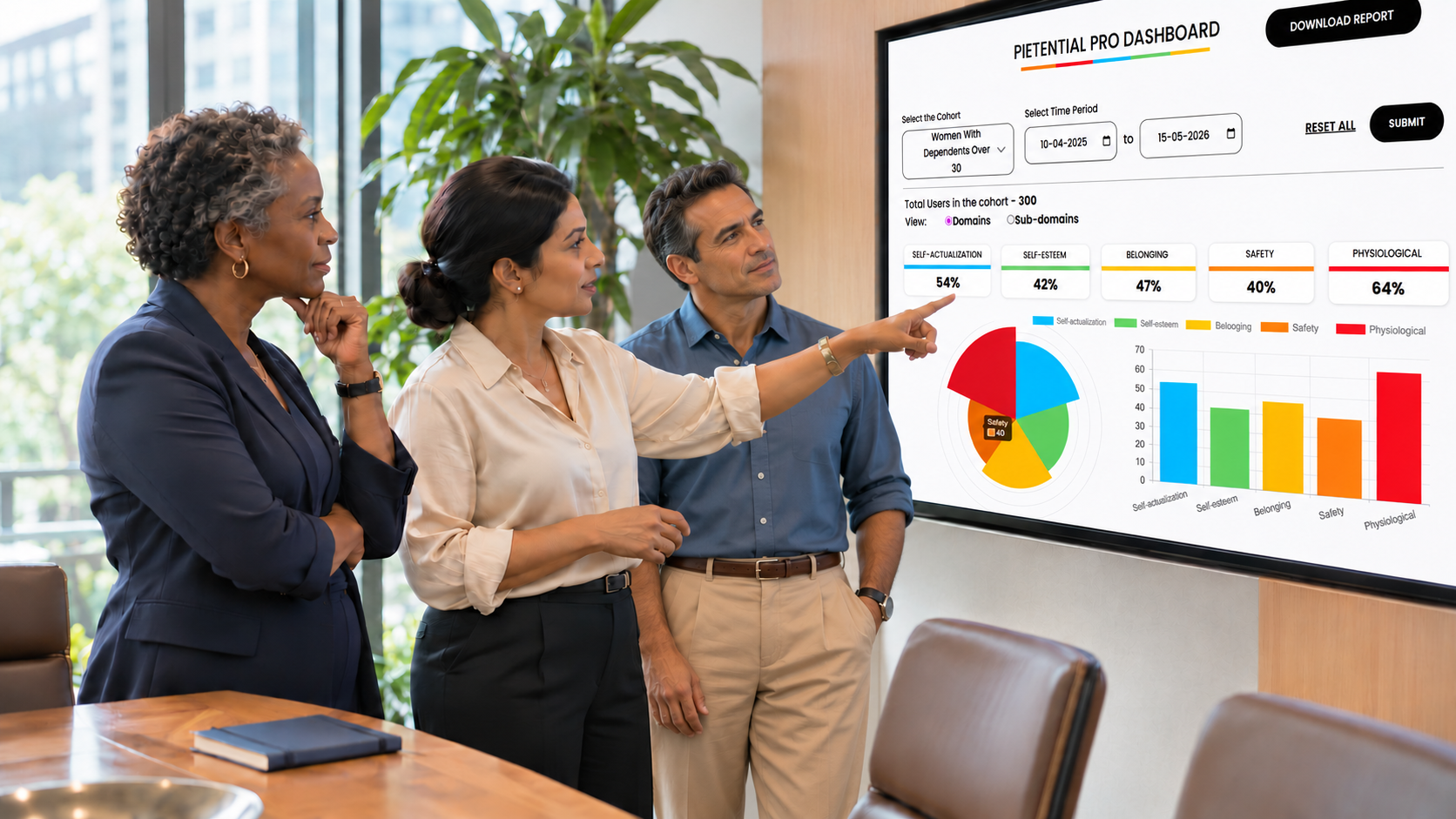
This is where a common, longitudinal outcome measure becomes useful. It gives leadership one consistent way to observe change across time, locations, and cohorts regardless of which service an employee used.
That additional layer does not prove that a specific vendor caused the movement. It gives the employer a common reference point that is not defined by one provider’s utilization model.
What to ask before accepting an ROI claim
Before renewing or expanding a wellbeing program, ask:
- Which outcomes were measured?
- Which costs and benefits were included in the calculation?
- What baseline or comparison group was used?
- How long was the evaluation period?
- Who was included in the analysis?
- Which findings came from the vendor and which were independently evaluated?
- What changed across the wider workforce during the same period?
- What other explanations could account for the result?
- Can the same outcome measure be compared across different programs, locations, or cohorts?
Those questions make it easier to see where the evidence is strong, where assumptions enter the calculation, and where the organization still needs its own measurement.
A stronger renewal conversation
A useful renewal decision should include vendor evidence, employer data, and a clear attribution method. This is especially relevant for benefits consultants evaluating program value across a wider portfolio.
The vendor can show what happened inside the program. The employer should also examine whether relevant workforce outcomes changed during the same period and whether those changes were broad, concentrated in certain groups, or unrelated to program use.
That gives finance, HR, and benefits teams a more defensible way to discuss workforce wellbeing ROI than relying on one reported savings multiple.